
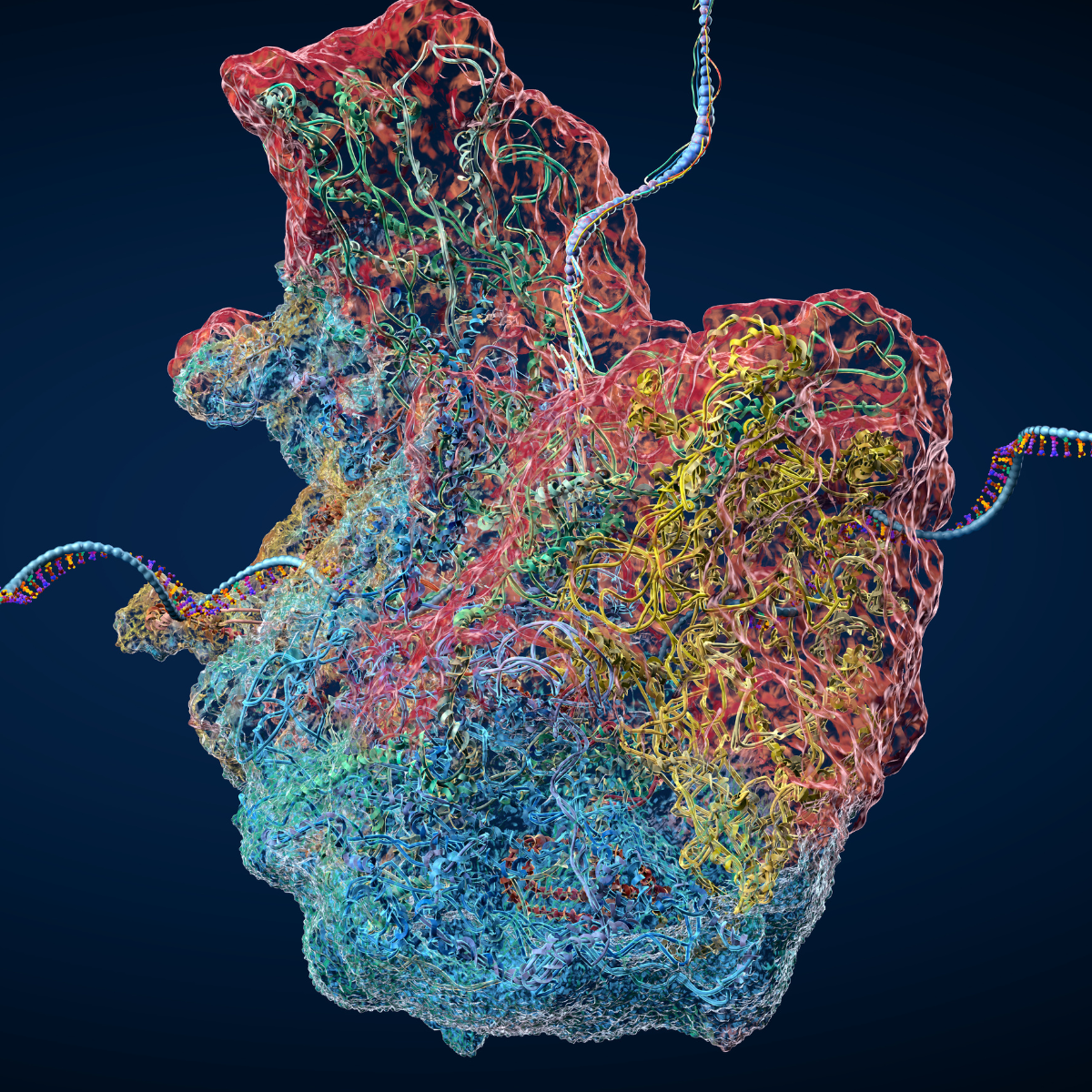
Translatomics for identifying coding regions, stress responses and 5’UTRs

Recent Publications Harnessing the Power of Translatomics
Every week we provide a digest of a small number of recent interesting papers in the field of translatomics.
In this week’s Sunday papers,
- Goodall et al. introduce PIRT-Seq, a refined ribosome profiling method that improves detection of coding regions across the genome.
- Herrera-Fernández et al. demonstrate how eIF2α-dependent stress responses selectively reprogram translation, using ribosome profiling data to predict adaptive protein expression.
- Ohashi et al. show how 5′UTR design influences ribosome recruitment and translation efficiency in synthetic mRNAs.
PIRT-Seq: a high-resolution whole-genome assay to identify protein-coding genes
Nucleic Acis Research, August 2025
Goodall, E.C.A., Hodges, F., Kok, W., Permana, B., Cuddihy, T., Yang, Z., Kahler, N., Shires III, K., Pullela, K., Torres, V.V.L., Rooke, J.L., Delhaye, A., Collet, J.-F., Bryant, J.A., Forde, B.M., Hemm, M.R. and Henderson, I.R

This study introduces PIRT-Seq, a high-resolution method designed to systematically identify translated regions across the genome. Building on ribosome profiling (Ribo-seq), the approach refines ribosome-protected fragment sequencing to improve sensitivity for detecting both canonical coding sequences and previously unannotated ORFs, including small and non-canonical translation events.
The authors optimized experimental parameters such as nuclease digestion and footprint isolation to enhance signal-to-noise, coupled with computational filtering to distinguish true ribosome occupancy from background. PIRT-Seq datasets show clear triplet periodicity, strong enrichment at start codons, and consistent footprint distributions along coding regions. Importantly, the method improves detection of lowly expressed ORFs and translation within transcripts previously classified as non-coding.
Beyond identifying coding regions, the study demonstrates how quantitative footprint data can be used to infer translation efficiency and initiation dynamics, providing a more nuanced view of the translatome.
PIRT-Seq expands the scope of ribosome profiling by enabling more comprehensive annotation of the coding genome. For translational profiling applications, it highlights how methodological refinements can uncover hidden proteomic complexity and improve discovery pipelines for novel peptides and therapeutic targets.
Learn more about EIRNABio’s ribosome profiling services here.
Predicting cellular adaptation proteins dependent on eIF2α regulation under stress conditions
Computational and Structural Biotechnology Journal, July 2025
Herrera-Fernández, V., Fanlo-Ucar, H., Gohl, P., Zeylan, M.E., Senyuz, S., Keskin, Ö., Gürsoy, A., Vicente, R., Oliva, B. and Muñoz, F.J
This study explores how eIF2α phosphorylation, a central regulator of the integrated stress response, selectively reshapes translation under conditions such as ER stress and neuronal perturbation. While global protein synthesis is generally suppressed during stress, specific transcripts evade repression and are preferentially translated.
The authors integrate computational modelling with publicly available ribosome profiling datasets to identify features that predict stress-dependent translation. They show that transcripts containing upstream ORFs (uORFs), favorable Kozak sequences, and specific 5′UTR structural features are more likely to be translated when eIF2α is activated. These features enable selective ribosome re-initiation or bypass of inhibitory elements, resulting in increased translation of proteins involved in stress adaptation and neuronal function.
By linking transcript architecture to ribosome occupancy changes, the study demonstrates that translation under stress is highly regulated and predictable rather than stochastic.
This work provides a framework for predicting translational responses based on sequence features, extending the utility of ribosome profiling from descriptive to predictive analysis. It has implications for understanding neurological disease and cellular adaptation and highlights how Ribo-seq datasets can be leveraged to model translational control mechanisms.
Learn more about EIRNABio’s ribosome profiling services here.
Selection of Short 5′-UTR of Chemically Synthesized mRNA to Improve Translation Efficiency
J-Stage, Chemical and Pharmaceutical Bulletin, 2025
Ohashi, S., Ishiguro, S., Fukunaga, T., Matsumoto, A., Hirata, M., Inagaki, M., Abe, N., Hashiya, F. and Abe, H

This study investigates how 5′UTR length and sequence composition influence translation efficiency in chemically synthesized mRNAs, an important consideration for mRNA-based therapeutics. The authors designed a panel of synthetic mRNAs with systematically varied 5′UTRs and measured protein output following cellular transfection.
Their results show that shorter 5′UTRs with reduced secondary structure consistently enhance translation efficiency, likely by facilitating ribosome scanning and improving start codon recognition. Constructs with minimal structural barriers showed higher protein expression without changes in mRNA abundance, indicating that the observed effects are driven at the level of translation initiation.
Although ribosome profiling was not directly performed, the findings align with established insights from Ribo-seq and polysome distribution analyses, where reduced 5′UTR complexity correlates with increased ribosome loading and efficient initiation. The study also highlights how synthetic mRNA design can be tuned to optimize translational output in therapeutic contexts.
Their efforts provides practical design principles for improving mRNA therapeutics, emphasizing the importance of 5′UTR architecture. It underscores how mechanistic understanding of ribosome behaviour can be translated into applied biotechnology solutions.
Learn more about EIRNABio’s ribosome profiling services here.