Translatomics for cellular stress, hypoxic stress and stalled nascent chains

Recent Publications Harnessing the Power of Translatomics
Every week we provide a digest of a small number of recent interesting papers in the field of translatomics.
In this week’s Sunday papers,
- Douglas, T. et al. identify HOIL-1 as an important regulator of ribosome homeostasis during cellular stress.
- Elhamamsy, A. et al. uncover previously unrecognized role for HIF1α in regulating ribosome biogenesis during hypoxic stress in breast cancer
- Khan, D. et al. reveal that mechanical forces acting on stalled nascent polypeptide chains (NCs) determine both the composition and fate of C-terminal amino-acid (CAT) tails during ribosome-associated quality control (RQC).
The atypical E3 ligase HOIL-1 safeguards the ribosome during cellular stress
Nature Cell Biology, 2026
Douglas, T., Nie, P., Zhang, J., Abdallah, K.S., Wu, Z., McReynolds, M., Iwai, K., Peng, J., Gilbert, W.V., Young, L.H. and Crews, C.M.
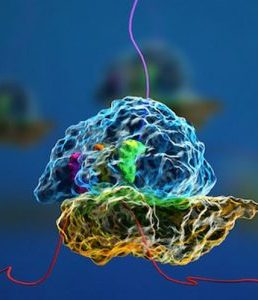
The paper identifies HOIL-1 as an important regulator of ribosome homeostasis during cellular stress. Although HOIL-1 is best known as an E3 ligase within LUBAC, the study shows that it also functions directly in the ribosome-associated quality-control (RQC) pathway. HOIL-1 promotes ubiquitination of ribosomal proteins, particularly RPS10 and RPS20, during translational stress. This modification facilitates RQC and helps resolve stalled or collided ribosomes, thereby protecting cells from the consequences of impaired translation. Loss of HOIL-1 results in increased ribosome collisions and heightened activation of the ribotoxic-stress sensor ZAKα. Importantly, HOIL-1 deficiency makes normally tolerable glucose starvation become ribotoxic. Under these conditions, ZAKα activates ATF4, ultimately promoting xCT-dependent disulfidptosis, a form of cell death caused by cystine-induced redox stress. The study also links HOIL-1 loss-of-function mutations to dilated cardiomyopathy, showing that HOIL-1-deficient cells and mice are particularly sensitive to nutrient and translational stress. Polysome profiling was important for demonstrating how HOIL-1 loss affects ribosome behaviour during cellular stress. Following anisomycin treatment, HOIL-1-deficient cells showed an increase in higher-order ribosome complexes, consistent with increased ribosome collisions. In contrast, glucose starvation caused polysome collapse into 80S monosomes, indicating translational arrest rather than collision-driven stress. Together with disome profiling, these experiments helped distinguish ribosome collision from ribosome stalling and established that HOIL-1 protects cells by promoting ribosome-associated quality control. Thus, polysome profiling provided a direct functional readout linking HOIL-1 activity, translational stress, ribosome integrity and cellular survival. Overall, the findings establish the ribosome as a cellular stress-signalling hub and reveal HOIL-1-mediated ribosome ubiquitination as a protective mechanism that maintains translation and cell survival during metabolic and translational stress.
Learn more about EIRNABio’s polysome profiling services here.
Hypoxic stress incites HIF1α-driven ribosome biogenesis that can be exploited by targeting RNA Polymerase I
Nature Communications, 2025
Elhamamsy, A., Metge, B.J., Swain, C.A., Elbahoty, M.H., Hinshaw, D.C., Kammerud, S.C., Chen, D., Samant, R.S. and Shevde, L.A.
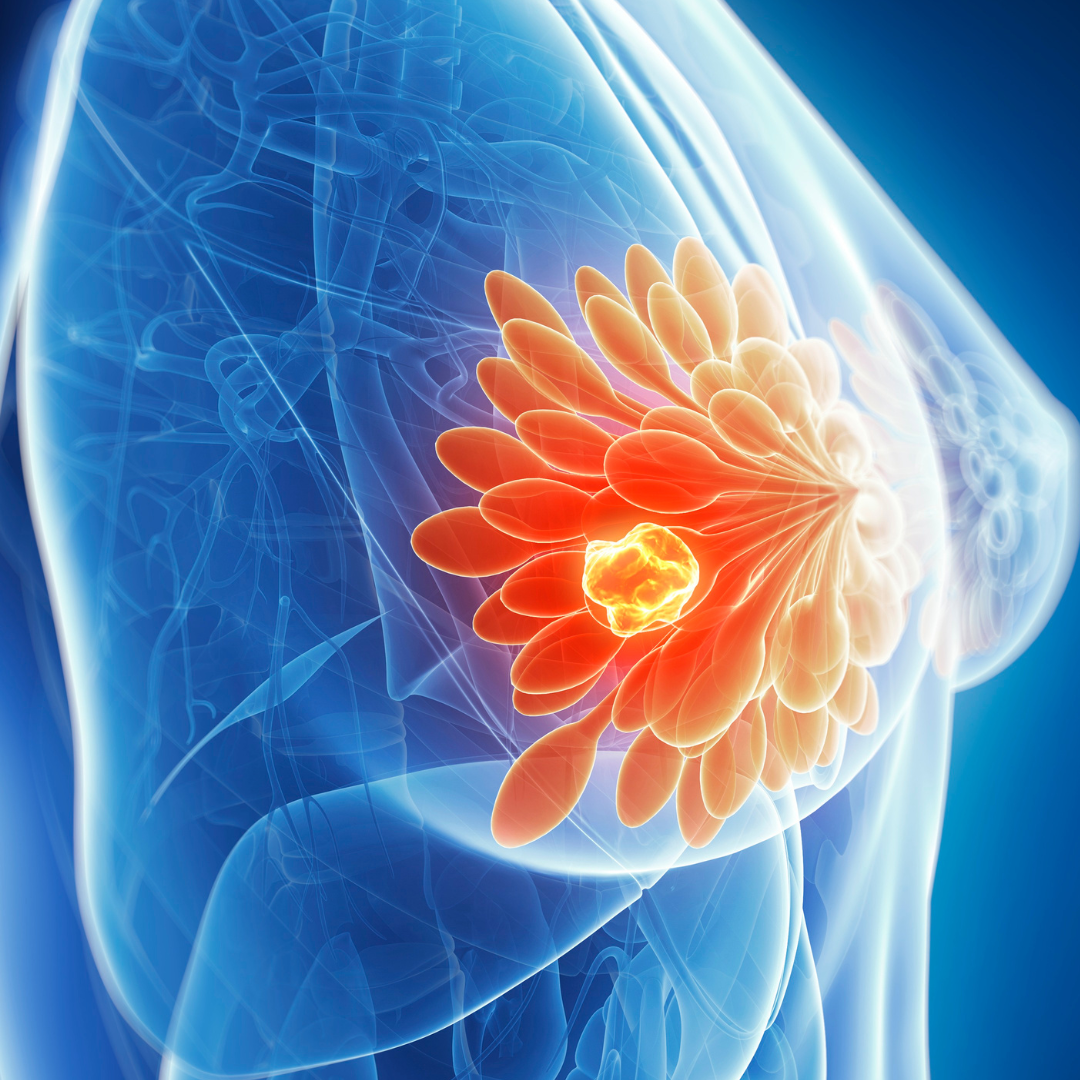
The study identifies a previously unrecognized role for HIF1α in regulating ribosome biogenesis during hypoxic stress in breast cancer. Analysis of patient datasets showed that hypoxic tumors have increased ribosome/rRNA biogenesis signatures, which correlate with elevated HIF1α expression and poorer clinical outcomes. Mechanistically, hypoxia stabilizes HIF1α and promotes its translocation to the nucleolus, where it binds the ribosomal DNA promoter and stimulates RNA Polymerase I (Pol I)-dependent rRNA transcription. HIF1α depletion reduces Pol I activity, while constitutively active HIF1α increases it, establishing HIF1α as a direct regulator of rRNA synthesis. The resulting increase in ribosome biogenesis supports the adaptation and aggressive behaviour of hypoxic cancer cells. Polysome-associated RNA sequencing identified 41 transcripts actively translated under hypoxia, including genes involved in hypoxic responses and metabolic adaptation. By separating polysome-enriched fractions and sequencing their associated RNAs, the study identified 41 transcripts consistently enriched in actively translating polysomes under hypoxia across T47D, SUM1315, and SKBR3 cells. These transcripts were associated with hypoxic responses and metabolic adaptation, indicating that hypoxia does not simply affect global protein synthesis but selectively remodels translation. Thus, polysome profiling linked HIF1α-driven ribosome biogenesis to functional changes in protein production that support cancer-cell adaptation and aggressiveness during hypoxic stress. Overall, the study reveals a HIF1α–Pol I–ribosome biogenesis axis that helps hypoxic tumors survive and metastasize, identifying Pol I as a potential therapeutic vulnerability.
Learn more about EIRNABio’s polysome profiling services here.
Mechanical forces regulate the composition and fate of stalled nascent chains
Molecular Cell, 2026
Khan, D., Vinayak, A.A., Sitron, C.S. and Brandman, O.
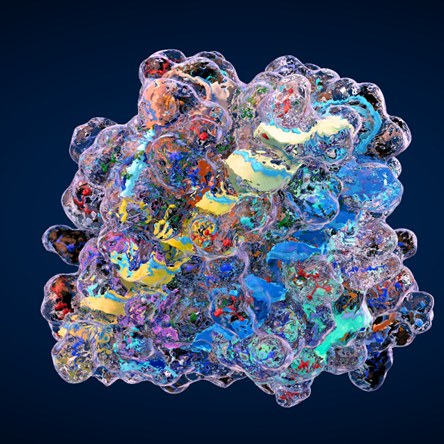
The study reveals that mechanical forces acting on stalled nascent polypeptide chains (NCs) determine both the composition and fate of C-terminal amino-acid (CAT) tails during ribosome-associated quality control (RQC). Using yeast biochemical and genetic approaches, the authors identify two functional modes of CAT tailing. Initially, in the absence of pulling forces, CAT tailing incorporates alanine (Ala) and threonine (Thr). This “extrusion mode” helps push the NC out of the ribosomal exit tunnel, exposing lysine residues for ubiquitination by the E3 ligase Ltn1p. Thr prevents excessive poly-Ala helix formation, thereby promoting efficient NC extrusion and ubiquitination. Following ubiquitination, the AAA+ ATPase Cdc48 generates a pulling force that switches CAT tailing into “release mode.” Short Ala-rich tails promote release of the NC from the 60S subunit and leave a C-terminal degron that facilitates subsequent degradation. Failure to make this transition causes clogged 60S ribosomal subunits, impaired translation, and aggregation of Thr-rich CAT-tailed proteins, producing proteotoxic stress. Polysome profiling provided a functional readout of how CAT tailing affects stalled-ribosome recycling and translation. Under cycloheximide-induced stalling, cells lacking CAT tailing showed abnormal polysome profiles, with a decreased polysome/80S ratio and increased 60S/80S ratio. These changes indicate accumulation of 60S–nascent-chain complexes that cannot efficiently re-enter translation. Importantly, the defect correlated with impaired growth, demonstrating that failure to release stalled nascent chains compromises ribosome availability and cellular fitness. Thus, polysome profiling directly supported the model that mechanically induced Ala CAT tailing promotes nascent-chain release, 60S recycling, and restoration of productive translation. Overall, the study establishes mechanical force as a key regulator of RQC, coordinating nascent-chain ubiquitination, ribosome recycling, and protein degradation.
Learn more about EIRNABio’s polysome profiling services here.