

Translatomics for specialised ribosomes, bioenergetics and IRES

Recent Publications Harnessing the Power of Translatomics
Every week we provide a digest of a small number of recent interesting papers in the field of translatomics.
In this week’s Sunday papers,
- Wei et al. find that specialised ribosomes contribute to chemotherapy resistance in colorectal cancer.
- Bebenek et al. show that DDX28 Suppresses Cell Migration and 3D Growth and Invasion in MDA-MB-231 Cells by Altering Bioenergetics.
- D’Agostino et al. show that internal ribosome entry sites (IRESs) can enhance the translation of separate target mRNAs in trans.
Translational control by RPL22L1-specific ribosomes enhances DNA repair and chemoresistance
Nature communications, 2026
Wei, S., Yu, W., Shen, Y., Qian, Y., Wang, Y., Li, T., Cao, J., Gao, X. and Cai, X.
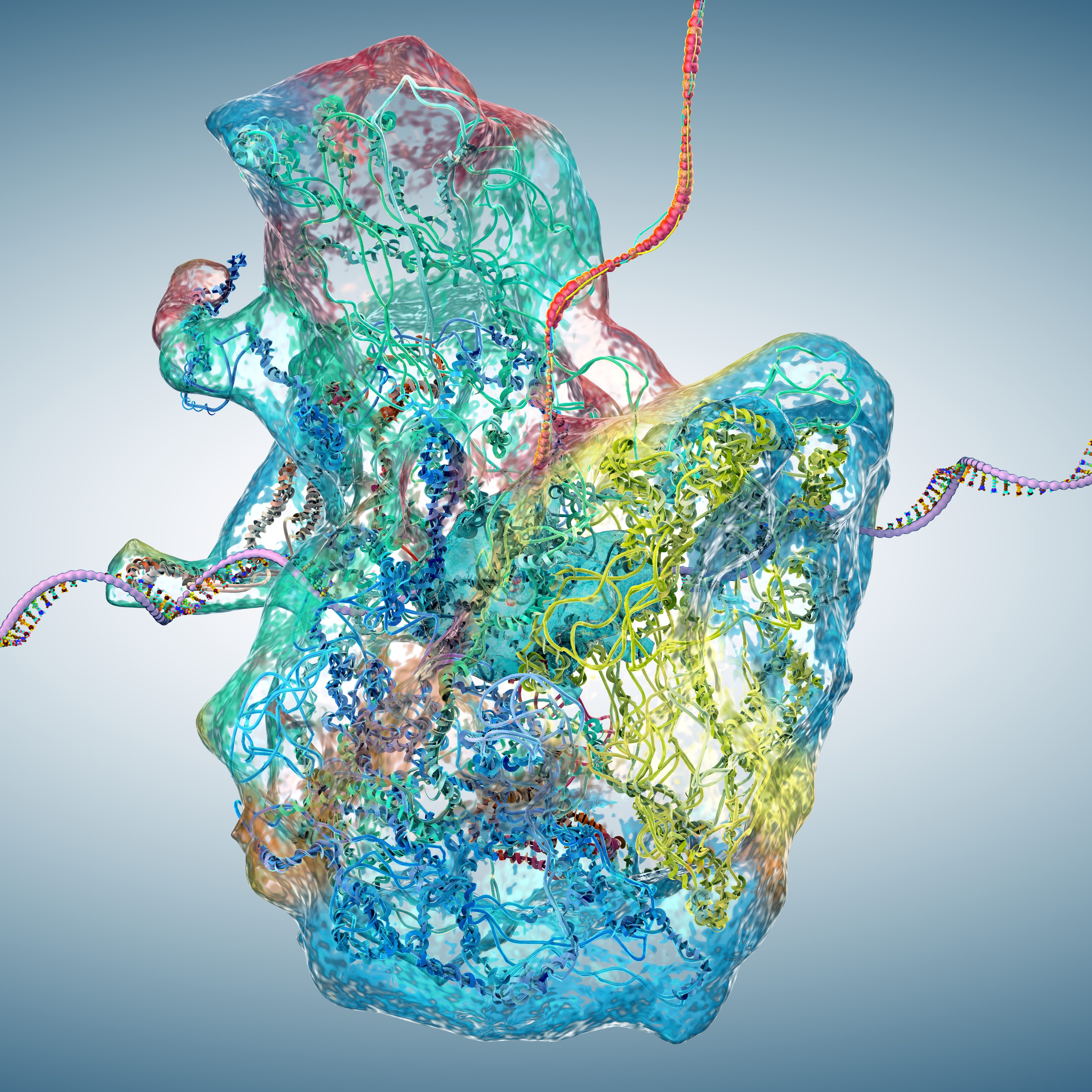
In this study the authors investigate how specialised ribosomes contribute to chemotherapy resistance in colorectal cancer (CRC). The study identifies RPL22L1 as a key regulator of DNA damage repair. Following DNA damage, RPL22L1 expression increases and the protein is incorporated into ribosomes. Ribosome profiling revealed that these specialised ribosomes preferentially translate mRNAs with highly structured 5′ untranslated regions (5′UTRs), particularly ATRX, through an internal ribosome entry site (IRES)-like, cap-independent mechanism. Polysome profiling supported and provided complementary evidence that RPL22L1 influences the translational engagement of target mRNAs, rather than merely changing their expression levels. Mechanistically, increased ATRX protein promotes the recruitment of DNA-dependent protein kinase catalytic subunit to DNA damage sites, enhancing non-homologous end joining, a pathway responsible for repairing DNA double-strand breaks. Consequently, RPL22L1-expressing cancer cells repair DNA damage more efficiently and exhibit greater resistance to cisplatin. Importantly, RPL22L1 depletion sensitised CRC cells to both cisplatin and the PARP inhibitor olaparib, reducing tumour growth in mouse xenograft models. The study also found that higher RPL22L1 expression was associated with shorter overall survival in CRC patients. Overall, the findings reveal a specialised ribosome-mediated mechanism linking selective protein translation to DNA repair and chemoresistance. Targeting RPL22L1 may provide a promising therapeutic strategy for enhancing the effectiveness of DNA-damaging chemotherapy and PARP inhibitors.
Learn more about EIRNABio’s ribosome profiling and polysome profiling services here.
The DEAD-box RNA Helicase DDX28 Suppresses Cell Migration and 3D Growth and Invasion in MDA-MB-231 Cells by Altering Bioenergetics
Molecular Biology of the Cell, 2025
Bebenek, O., Pascetta, S.A., Steed, J., Mizzoni, M., Kellington, A.T., Barnes, M.K., Osorio-MacCready, T. and Uniacke, J.
The study found that DDX28 expression is reduced in several cancer cell lines, particularly MDA-MB-231 breast cancer cells, compared with non-cancerous HEK293 cells. Overexpression of DDX28 significantly reduced hypoxia-induced cell migration, spheroid growth and invasion in MDA-MB-231 cells, suggesting a tumour-suppressive role. DDX28 altered cellular bioenergetics by changing the balance between mitochondrial oxidative phosphorylation (OXPHOS) and glycolysis. In MDA-MB-231 cells, DDX28 overexpression increased ATP production in normoxia but reduced ATP production under hypoxia. Importantly, pharmacological inhibition of OXPHOS or glycolysis reversed the suppressive effects of DDX28 on migration, spheroid growth and invasion, demonstrating that these metabolic pathways are involved in its effects. Polysome profiling was used to assess whether DDX28 overexpression altered the translation of HIF-2α (EPAS1) and its targets, EGFR and IGF1R, under hypoxia. By measuring their association with polysomes relative to monosomes, the researchers found no significant changes in their translational activity. This indicated that DDX28’s effects on cancer-cell migration, spheroid growth and invasion were not explained by altered translation of these HIF-2α-related transcripts. Thus, the findings rely on targeted polysome analysis rather than genome-wide identification of changes in translation. Overall, the study identifies DDX28 as a potential context-dependent tumour suppressor that regulates cancer-cell behaviour through metabolic control rather than directly inhibiting HIF-2α signalling.
Learn more about EIRNABio’s polysome profiling services here.
Internal ribosome entry sites enhance translation in trans in antisense non-coding SINEUP and circular RNAs
Nucleic Acids Research, 2025
D’Agostino, S., Tettey-Matey, A., Volpe, M., Pierattini, B., D’Agostino, M., Smělá, D., Ansaloni, F., Broglia, L., Lau, P., Peruzzo, O. and Braccia, C.

D’Agostino et al. demonstrate that internal ribosome entry sites (IRESs) can enhance the translation of separate target mRNAs in trans, rather than acting only on the protein-coding sequence within the same RNA. The researchers first showed that the inverted SINEB2 (invSINEB2) element in the natural antisense long non-coding RNA AS Uchl1 has IRES activity in cis. They also found that synthetic SINEUPs (SINEB2 sequence to UP-regulate translation), which combine an effector domain with a target-specific antisense binding domain, can use viral and cellular IRES sequences to increase target protein expression. Polysome profiling showed that SINEUP RNAs associate with the 40S and 60S ribosomal subunits and 80S monosomes but are largely absent from polysome fractions. This suggests that SINEUPs interact with ribosomes without themselves undergoing active translation. The strongest tested construct, containing the EMCV IRES, increased target protein levels by at least two-fold. The study then identified a natural circular RNA, circMyc , which enhances expression of the PXK protein. CircMyc interacts with PXK mRNA through complementary antisense sequences, promoting its association with polysomes and therefore its translation. Mutating key binding sites reduced this effect, while restoring the relevant target sequences recovered it. Importantly, these effects occurred without corresponding increases in target mRNA abundance, supporting translational rather than transcriptional regulation. Overall, the findings reveal a previously underappreciated role for IRES-containing non-coding RNAs in regulating protein production and suggest potential applications for RNA-based therapeutic strategies.
Learn more about EIRNABio’s polysome profiling services here.