

Translatomics for lncRNA, dietary restriction, and NMD

Recent Publications Harnessing the Power of Translatomics
Every week we provide a digest of a small number of recent interesting papers in the field of translatomics.
In this week’s Sunday papers,
- Chen et al. systematically identify lncRNA-derived small open reading frames in rice to provide direct experimental evidence of their peptide-encoding capacity.
- van Galen et al. analyzed parallel liver profiles of wild-type mice, and DNA repair-deficient mice, a model of accelerated aging that is highly responsive to the lifespan-extending effects of dietary restriction.
- Young et al. aimed to identify the “cryptic” premature termination events triggering NMD on cerevisiae transcripts.
The multiomics landscape of small peptides encoded by long noncoding RNA-derived small open reading frames in rice
The Plant Cell, 2026
Chen, Z., Lin, H., Wei, L., Wang, X., Song, W., Xu, G., Wang, S., Peng, L., Peng, T., Wang, D., Wu, Y. et al.

Chen et al. investigate the hidden coding potential of long noncoding RNAs (lncRNAs) in rice, mapping the landscape of small peptides encoded by lncRNA-derived small open reading frames (LSEPs). While lncRNAs make up a large portion of complex plant genomes and are traditionally classified as non-protein-coding, recent evidence suggests a subset contains small open reading frames capable of producing functional peptides. However, the existence, abundance, and biological significance of these LSEPs in plants have remained largely uncharacterized. The authors aimed to address this knowledge gap by systematically identifying LSEPs in rice to provide direct experimental evidence of their peptide-encoding capacity, ultimately establishing a robust multiomics workflow to facilitate LSEP discovery and functional characterization across diverse plant species.
To overcome the challenge of detecting small, unannotated peptides, the researchers designed an integrated pipeline combining transcriptomics (RNA-seq), translatomics (ribosome profiling, or Ribo-seq), and mass spectrometry-based proteomics. Transcriptomic profiling established a baseline, identifying 2,764 lncRNAs actively expressed in rice leaves. Ribosome profiling provided the critical functional link by mapping actively translating ribosomes. It revealed that a striking 42.69% of the detected lncRNAs physically associated with ribosomes, strongly implying they are actively translated into polypeptides rather than functioning solely as structural or regulatory RNAs. Coupled with optimized liquid chromatography-tandem mass spectrometry, which confidently confirmed 376 LSEPs at the protein level, the integrated RNA-seq and Ribo-seq approach successfully validates the substantial peptide-encoding capacity concealed within plant lncRNAs.
Learn more about EIRNABio’s ribosome profiling services here.
Translational Changes upon Aging and Dietary Restriction in Progeroid DNA-Repair-Deficient Mice
Aging Biology, 2026
van Galen, I., Ozinga, R.A., Hofman, D.A., van Dinter, J., Engels, S.A., Smit, K., van Heesch, S., Hoeijmakers, J.H. and Vermeij, W.P.

The authors investigate how aging and dietary restriction (DR) impact protein translation in the context of accumulating DNA damage. DNA damage is a primary driver of aging, known to cause “transcription stress” by physically stalling RNA polymerases and skewing the transcriptional landscape in a gene-length-dependent manner. However, it was previously unknown how this disrupted transcriptional output affects downstream translation, or whether the translation machinery itself is similarly impaired by aging. To address this gap, researchers analyzed parallel liver profiles of wild-type mice and Ercc1Δ/− progeroid (DNA repair-deficient) mice, a model of accelerated aging that is highly responsive to the lifespan-extending effects of DR. The study compared overall messenger RNA abundance (via RNA-seq) with actively translated transcripts (via ribosome profiling) to precisely distinguish transcription from translation.
Transcriptional profiling confirmed significant gene expression alterations associated with accelerated, normal, and delayed aging. It revealed a shared prioritization of inflammation, metabolic redesign, and translation initiation factors across aged wild-type and progeroid mice. By mapping active ribosomes, Ribo-seq demonstrated that the transcriptional alterations are closely preserved at the translational level. This rules out translation as a major independent driver of age-related gene expression changes. However, ribosome profiling uncovered critical translational fine-tuning. It revealed aging-related shifts in absolute codon occupancy, increased ribosomal pausing, and decreased expression of upstream open reading frames (uORFs), translational dynamics that were surprisingly intensified, rather than reversed, by dietary restriction.
Learn more about EIRNABio’s ribosome profiling services here.
Identification of translation events that drive nonsense-mediated mRNA decay reveals functional roles for alternative RNA isoforms
Nature Communications, 2026
Young, D.J., Wang, Y. and Guydosh, N.R.
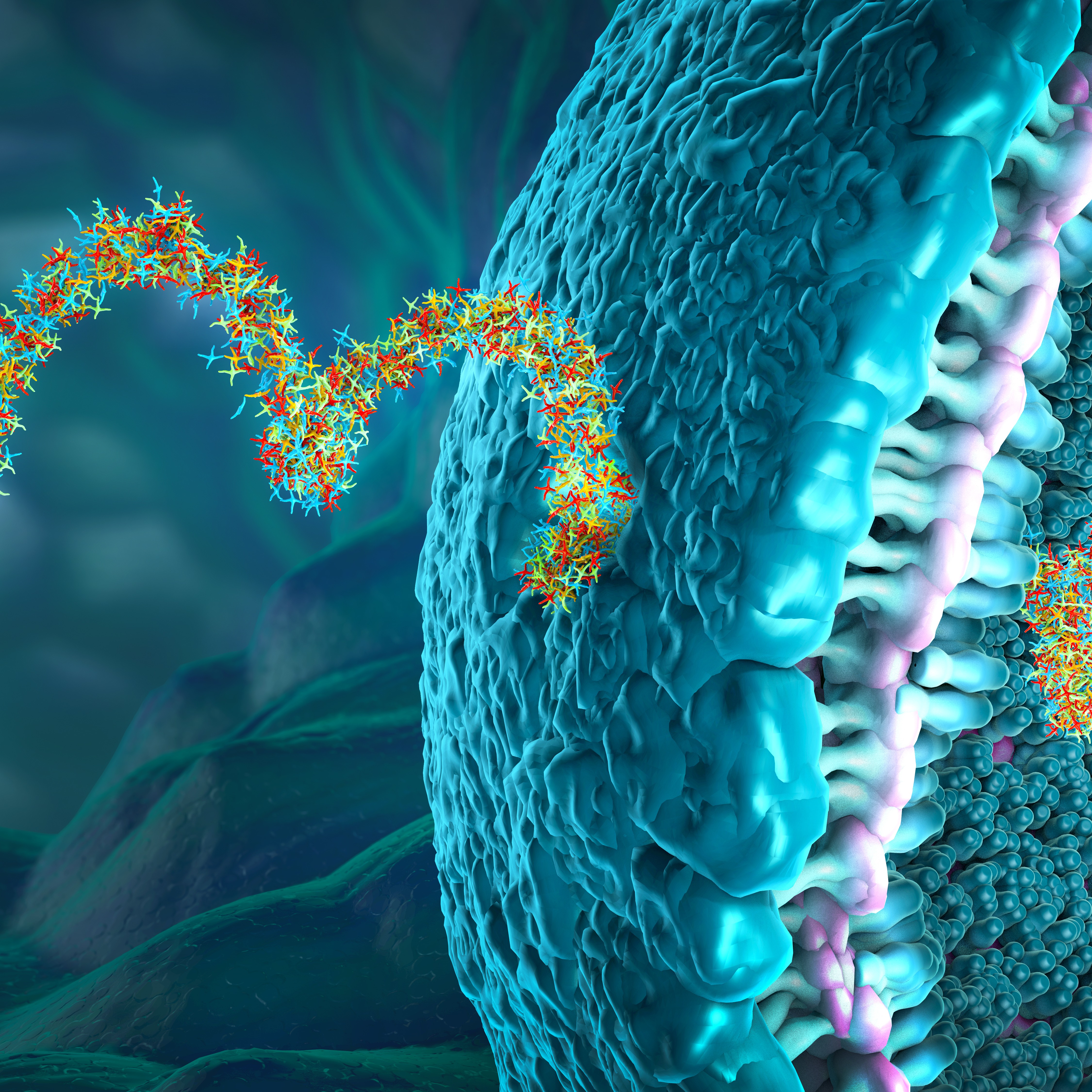
In this study, the authors investigate the underlying translation events that trigger the nonsense-mediated mRNA decay (NMD) pathway in yeast, revealing the critical role NMD plays in gene regulation via alternative RNA isoforms. The NMD pathway is a conserved cellular surveillance mechanism that degrades mRNAs undergoing premature translation termination. However, its exact biological function remains poorly understood. Previous RNA-seq studies of NMD-deficient yeast presented a paradox: most transcripts stabilized upon NMD inactivation lacked obvious premature termination codons. To address this, the researchers aimed to identify the “cryptic” premature termination events triggering NMD on these transcripts, seeking to understand the structural classes of targeted mRNAs and the broader regulatory role of NMD in eukaryotic gene expression.
The study utilized a combined approach of RNA-seq and 40S ribosome profiling to map exactly where translation initiates and terminates on NMD-targeted transcripts. With RNA-seq, the authors identified which transcripts were stabilized when the NMD pathway was disrupted, pinpointing the overall targets of decay, including many previously unannotated alternative RNA isoforms. Ribosome profiling provided a high-resolution snapshot of translating ribosomes. Specifically, 40S ribosome profiling was crucial for locating upstream open reading frames and cryptic initiation sites. By combining these methods, the researchers successfully identified premature termination events that account for NMD on nearly all the targeted transcripts. Notably, they discovered that many targeted alternative isoforms function as long un-decoded transcript isoforms in two-promoter systems, demonstrating that NMD actively shapes environmental responses, such as regulating the DAL5 gene in response to nitrogen levels.
Learn more about EIRNABio’s ribosome profiling services here.