
Translatomics for liver cancer, prostate cancer, and acute myeloid leukaemia

Recent Publications Harnessing the Power of Translatomics
Every week we provide a digest of a small number of recent interesting papers in the field of translatomics.
In this week’s Sunday papers,
- Contreras et al. find using polysome-seq that sorafenib causes global suppression of translation and also uses selective translation to treat hepatocellular carcinoma.
- Cordova et al. find using polysome-seq that caloric restriction along with enzalutamide treatment reduces prostate tumour growth by preventing androgen receptor translation.
- Li et al. find through polysome-seq that FTO degradation prevents ribosome biogenesis therefore inhibiting global translation, with potential use in AML therapy.
Sorafenib-associated translation reprogramming in hepatocellular carcinoma cells
RNA Biology, 2025
Contreras, L., Rodríguez-Gil, A., Muntané, J. and de la Cruz, J.

The authors of this study used a genome wide polysome profiling approach to determine the mechanism by which sorafenib (Sfb) alters translation in hepatocellular carcinoma (HCC) cells using the human hepatoblastoma cell line HepG2. Sfb has been previously identified as both an antiproliferative and pro-apoptotic for HCC treatment, but the underlying mechanism of action has not been fully understood. This study aims to fill this gap through polysome-seq to examine the translation in liver cancer cells in response to a therapeutic concentration of Sfb to identify differentially translated mRNAs.
In this study, HCC cells were treated with 10µM of Sfb for 12 hours and upon polysome profiling analysis the mRNAs were separated into two fractions, low molecular complex peaks with free ribosomal subunits associated and fractions corresponding to polysome peaks which are actively being translated by multiple ribosomes. These fractions were sequenced by next generation sequencing to calculate the translation level of each transcript.
Through polysome-seq it was found that Sfb causes global repression of translation, reducing translation of genes involved in cell growth and proliferation. However, it does not cause uniform suppression across genes. Sfb induces selective translation whereby some mRNAs remained to be efficiently translated despite the overall suppression of protein synthesis. This study found repressed translation of transcripts involved in mitochondrial metabolism, energy production and extracellular matrix synthesis. mRNA transcripts involved in stress adaptation and survival showed increased translation suggesting that Sfb may trigger an adaptive response in tumour cells overtime to cause resistant to this type of cancer therapy.
Learn more about EIRNABio’s polysome profiling services here.
Caloric Restriction Enhances the Efficacy of Antiandrogen Therapy in Prostate Cancer by Inhibiting Androgen Receptor Translation
American Association for Cancer Research, 2025.
Cordova, R.A., Elbanna, M., Rupert, C., Orsi, S.A., Sommers, N.R., Klunk, A.J., Shen, L., Misra, J., Hanquier, J.N., Tsompana, M., Wang, Y. et al.

The authors of this study were investigating the implementation of dietary interventions such as caloric and protein restrictions in combination with enzalutamide therapy. This therapy is known to suppress the androgen receptor (AR) at the translational level. AR is a transcription factor and is the primary driver of prostate cancer growth and impacts survival outcomes. This study uses polysome-seq to analyse the translation of AR mRNA upon alternate day fasting.
This research found that during periods of caloric restriction, there was a deprivation of amino acids that caused impaired translation and synthesis of the AR protein. This leads to reduction in the AR protein levels which in turn reduce the effect of downstream androgen signalling pathways limiting tumour growth. Even though there was a reduction in translation as a result of caloric restriction, there was minimal reduction in mRNA transcript restriction. This suggests that the key control mechanism of the interaction between dietary restriction and antiandrogen therapy is translational control rather than transcriptional control.
This study found that caloric restriction along with enzalutamide treatment showed significantly greater reduction in tumour growth than simply treating with enzalutamide alone. This suggests that this approach to treatment may improve patient outcomes. The polysome profiling data shows that developing therapeutic approaches that inhibit AR translation elongation through caloric restriction improve the response to therapies targeting AR.
Learn more about EIRNABio’s polysome profiling services here.
FTO degrader impairs ribosome biogenesis and protein translation in acute myeloid leukemia
Science Advances, 2025.
Li, W., Zhao, Y., Wu, D., Chen, Z., Qing, Y., Yang, F., Ji, F., Zhang, L., Sau, L., Chen, J. and He, C.
This study demonstrates targeting the RNA N6-methyladenosine (m6A) eraser, called the fat mass and obesity associated protein (FTO), as a target for acute myeloid leukaemia (AML) treatment as FTO has been identified as an oncogenic factor in AML. m6A is an important in many RNA modification pathways in eukaryotic cells and in regulating RNA stability, splicing, translation and RNA structure regulation. In cancer, FTO is often overexpressed and reduces the levels of m6A on mRNAs which encode proteins for cell proliferation, survival and therapeutic resistance. With FTO preventing the degradation of these transcripts by removing the m6A modifications, expression of pathways that promote tumour growth are sustained.
This study found that FTO supports AML through the maintenance of expression of genes involved in ribosome biogenesis. Through targeted degradation of FTO, ribosome biogenesis may be disrupted by an increase in m6A modifications of mRNAs associated with ribosome biogenesis to promote their YTHDF2-mediated decay.
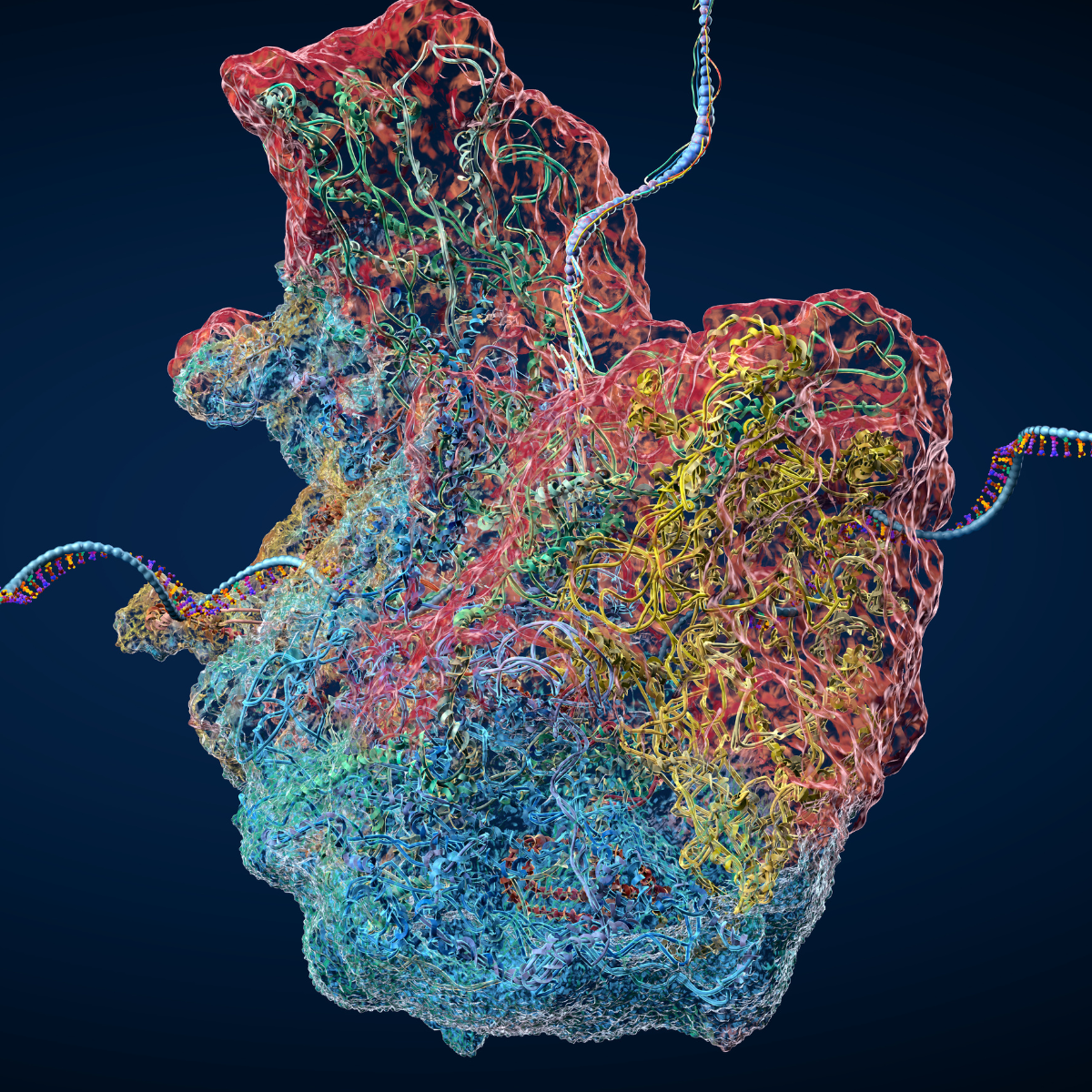
This study used polysome profiling to investigate the impact of FTO degradation. The polysome profiling results show that a reduction in the number of heavy polysomes fractions in cell lysates where FTO was degraded which demonstrates impaired ribosome loading onto mRNAs indicating reduced global translation in the cell lysate. These findings suggest that FTO degradation reduces global translation which leads to lower AML cell proliferation by targeting the production of the translational machinery itself.
Learn more about EIRNABio’s polysome profiling services here.