Translatomics for translational control across cell fate and function

Recent Publications Harnessing the Power of Translatomics
Every week we provide a digest of a small number of recent interesting papers in the field of translatomics.
In this week’s Sunday papers,
- Boehm et al. combine rapid UPF1 depletion with Ribo-seq to reveal how nonsense-mediated decay shapes the human translation landscape.
- Jungfleisch et al. use Ribo-seq to demonstrate that eIF2A’s role in migration is independent of its canonical translation function.
- Okubo et al. uncover how the translation initiation factor EIF3D maintains signalling balance in human pluripotent stem cells.
Rapid UPF1 depletion illuminates the temporal dynamics of the NMD-regulated human transcriptome
Molecular Cell, 2025
Volker Boehm, Damaris Wallmeroth, Paul O. Wulf, Oliver Popp, Luiz Gustavo Teixeira Alves, Lucie Reinecke, Maximilian Riedel, Emanuel Wyler, Marek Franitza, Kerstin Becker, Karina Polkovnychenko, Simone Del Giudice, Nouhad Benlasfer, Philipp Mertins, Markus Landthaler, Niels H. Gehring
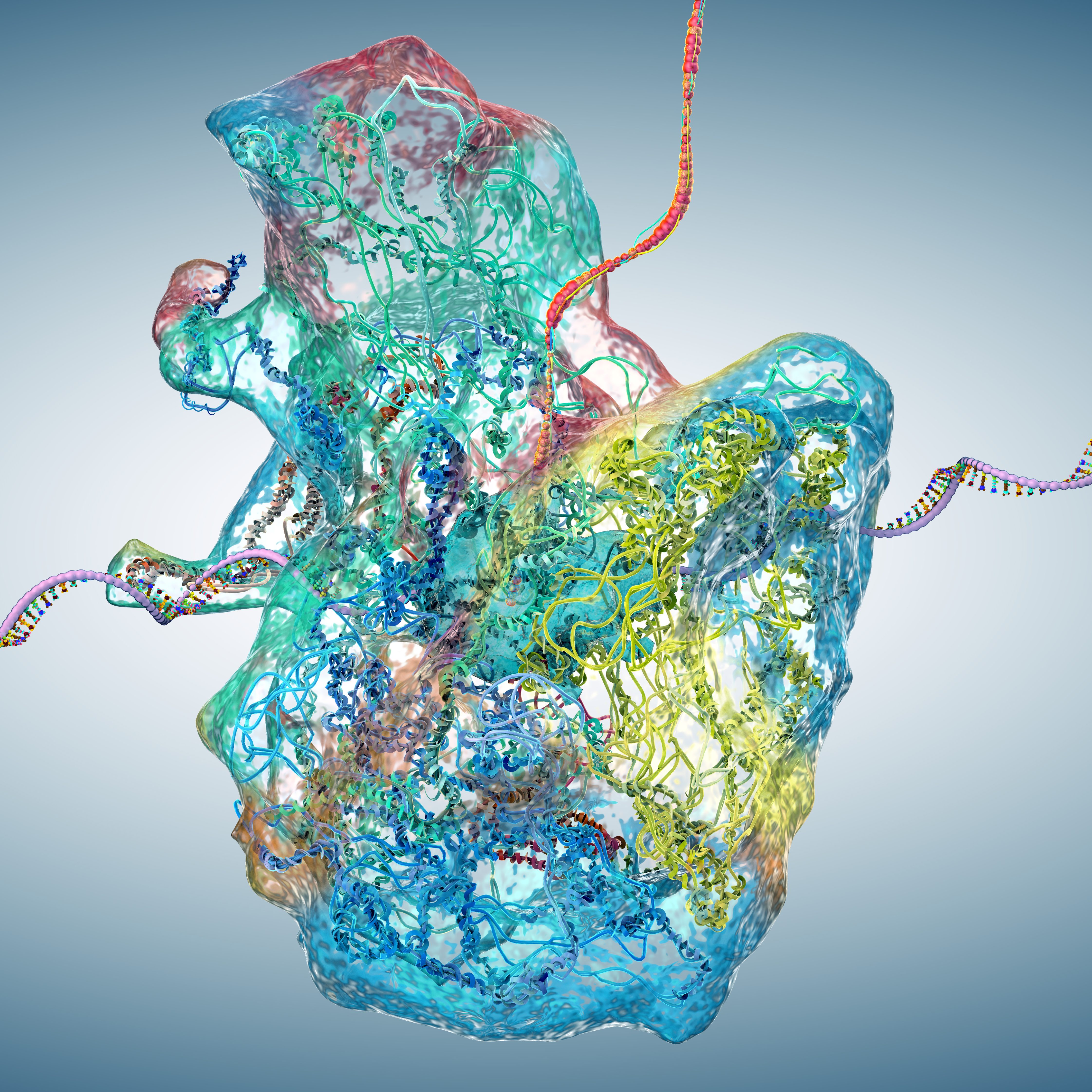
Nonsense-mediated mRNA decay (NMD) is a major RNA surveillance pathway that removes transcripts containing premature termination codons and regulates the abundance of many physiological mRNAs. The central NMD factor UPF1 has been difficult to study because complete loss of UPF1 causes widespread cellular consequences, making it challenging to distinguish direct targets from secondary effects. In this study, the authors generated human cell models containing inducible degron-tagged endogenous UPF1, enabling rapid depletion and time-resolved analysis of NMD disruption. By combining transcriptomics, long-read sequencing, proteomics, and ribosome profiling (Ribo-seq), they mapped how UPF1 loss reshapes the transcriptome and translation landscape over time. Ribo-seq analysis helped identify transcripts affected at the level of translation-associated regulation and contributed to defining the consolidated NMD-regulated human transcriptome.
The authors found that many direct NMD targets accumulate rapidly following UPF1 depletion, with alternative splicing emerging as a major source of NMD-sensitive transcripts. They also identified previously unannotated regulated transcripts and non-canonical NMD events that do not follow traditional degradation models.
This work provides a high-resolution view of NMD dynamics and demonstrates how combining temporal transcriptomics with translatome approaches can reveal RNA regulation mechanisms. For ribosome profiling applications, the study highlights how Ribo-seq can complement RNA decay studies by linking transcript stability with translation-associated regulation.
Learn more about EIRNABio’s ribosome profiling services here.
eIF2A regulates cell migration in a translation-independent manner
Science Advances, 2025.
Jennifer Jungfleisch, Neus Mestre-Farràs, Raúl Gómez-Riera, Oriane Pourcelot, Edouard Bertrand, Nadia Halidi, Fátima Gebauer

The translation initiation factor eIF2A has traditionally been studied for its role in alternative translation initiation, including initiation at non-canonical start codons. This study reveals an unexpected function for eIF2A outside of its classical translational role, demonstrating that it can regulate cancer cell migration independently of global translation control.
Using melanoma cell models representing non-tumoral and metastatic states, the authors investigated the consequences of eIF2A depletion through functional assays, interaction studies, and genome-wide translation analysis. Ribosome profiling (Ribo-seq) was performed alongside RNA sequencing to determine whether loss of eIF2A altered transcript-specific translation. Surprisingly, depletion of eIF2A produced minimal changes in overall translation, suggesting that its migration-related function was not driven by broad translational regulation.
Instead, interactome analysis identified centrosomal proteins as major eIF2A-associated factors. The authors showed that eIF2A localizes to the centrosome, supports centrosome composition and orientation, and promotes efficient cell migration. This activity depends on its C-terminal disordered region, which interacts with RNA but does not require active translation.
This study expands the functional understanding of translation-associated proteins by showing that they can have important non-translational roles. The use of Ribo-seq was critical for separating eIF2A’s classical translation-related activities from its newly identified role in cellular organisation and migration.
Learn more about EIRNABio’s ribosome profiling services here.
EIF3D safeguards the homeostasis of key signaling pathways in human primed pluripotency
Science Advances, 2025.
Chikako Okubo, Michiko Nakamura, Masae Sato, Yuichi Shichino, Mari Mito, Yasuhiro Takashima, Shintaro Iwasaki, Kazutoshi Takahashi
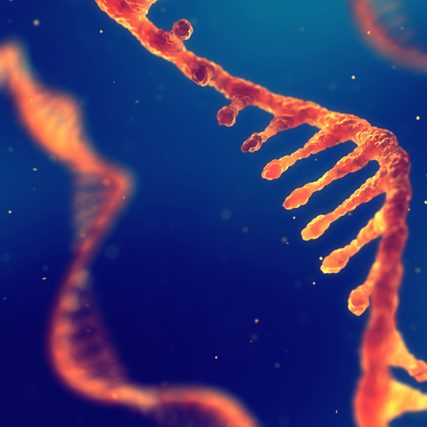
While transcriptional regulation of pluripotency has been extensively studied, increasing evidence highlights the importance of translational control in shaping cell identity. This study investigates the role of EIF3D, a component of the eukaryotic translation initiation complex, in maintaining signalling pathway homeostasis in human primed pluripotent stem cells.
Using EIF3D depletion models, the authors combined transcriptomic, proteomic, and translation-focused approaches to determine how loss of this initiation factor affects stem cell regulation. Polysome profiling revealed changes in ribosome distribution following EIF3D depletion, demonstrating impaired translation initiation and reduced engagement of specific mRNAs with actively translating ribosomes. Complementary ribosome profiling (Ribo-seq) enabled genome-wide assessment of translation efficiency, identifying transcripts whose protein synthesis output was selectively altered despite relatively limited changes in RNA abundance.
The authors found that EIF3D preferentially regulates translation of key signalling pathway components, including factors involved in pathways such as WNT, MAPK, insulin, and TGFβ signalling, which are essential for maintaining pluripotent cell states. Disruption of EIF3D-dependent translation altered signalling balance and compromised pluripotency-associated characteristics.
This study demonstrates how combining polysome profiling and Ribo-seq can reveal translational regulation beyond conventional transcriptomics. By showing that translation initiation factors selectively control signalling networks, the work highlights the importance of translational profiling approaches for understanding cell fate decisions and complex regulatory systems.
Learn more about EIRNABio’s ribosome profiling and polysome profiling services here.