
Translatomics for wheat, ribosome pausing, and rice

Recent Publications Harnessing the Power of Translatomics
Every week we provide a digest of a small number of recent interesting papers in the field of translatomics.
In this week’s Sunday papers,
- Chen et al. use ribosome profiling to investigate how heat stress reshapes the translatome in wheat grain.
- Han et al. use ribosome profiling to survey ribosome pausing in the gram-positive bacterium Bacillus subtilis.
- Qian et al. used nanopore direct RNA sequencing and ribosome profiling to simultaneously map changes in the epitranscriptome and the translatome in rice seedlings.
Translational regulation plasticity shapes wheat grain adaptation to heat stress
Genome Biology, 2025.
Chen, Y., Guo, Y., Ma, M., Wang, Y., Guo, W., Hu, Z., Xin, M., Yao, Y., Ni, Z., Sun, Q. and Peng, H.

With rising global temperatures, heat stress poses a growing threat to crop yield, especially for widely cultivated crops such as bread wheat (Triticum aestivum). Much research on plant heat-stress responses focuses on transcriptional changes. However, translation is also a major regulatory layer, and remains far less explored in wheat. The authors aimed to fill this gap by applying ribosome profiling combined with high-throughput sequencing to developing wheat grains at three stages (5, 10, and 15 days after anthesis), comparing normal vs. heat-treated conditions. They find that heat stress dramatically reshapes the translatome, where many mRNAs show altered translation efficiency (TE), including transcripts related to grain development, translation machinery itself, and heat-stress response.
Moreover, regulatory elements such as upstream ORFs (uORFs) and downstream ORFs (dORFs) respond to heat. Globally, uORF translation tended to decrease under heat, while dORF translation often increased, suggesting a role for these elements in modulating main open reading frame translation under stress. The study also uncovered activation of many non-canonical ORFs. Long non-coding RNAs, previously assumed non-coding, showed ribosome occupancy under heat, indicating translation of microproteins. Some of these microproteins localize to cellular sites such as the nucleus, endoplasmic reticulum, P-bodies, and interact with heat-shock proteins, hinting at functional roles in heat response. The work expands our understanding of molecular adaptation to heat, and the data provides a valuable resource for future breeding efforts aiming at heat-tolerant, climate-resilient wheat varieties.
Learn more about EIRNABio’s ribosome profiling services here.
The stringent response does not influence ribosome pausing in Bacillus subtilis
Nucleic Acids Research, 2025.
Han, Y., Agnolin, A., van der Kloet, F., Sauer, C., Costea, P.I., Felle, M.F., Appelbaum, M. and Hamoen, L.W.
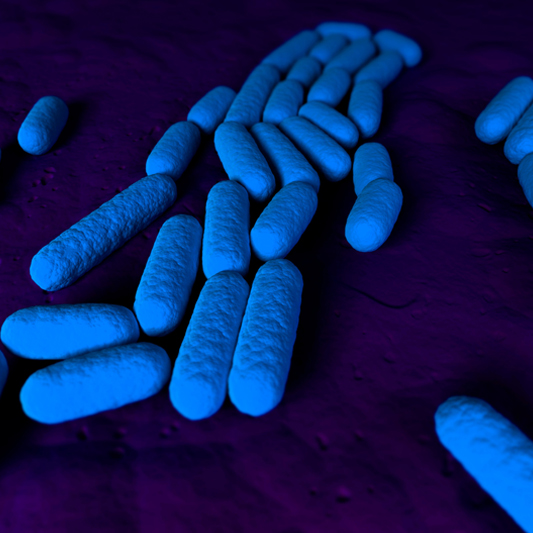
In bacteria, the stringent response is a stress reaction triggered by amino-acid starvation or other stresses, mediated by the alarmones (p)ppGpp. This response reduces global transcription and translation, conserving resources until conditions improve. It has been hypothesized that the stringent response might also affect the elongation phase of translation, potentially causing increased ribosome pausing during protein synthesis. Pausing can impact protein folding and production efficiency. To test this, the authors used ribosome profiling to survey genome-wide translation in the gram-positive bacterium Bacillus subtilis. They compared wild-type cells with a “ppGpp⁰” mutant lacking stringent response, both overexpressing a secreted enzyme α-amylase AmyM. This allowed measurement of ribosome occupancy and pausing across all mRNAs during stationary phase.
Blocking the stringent response increased overall protein synthesis, yet production of the secreted enzyme AmyM went down, contrary to expectations. Crucially, the data showed no major changes in ribosome pausing across the transcriptome in the mutant lacking the stringent response; translation elongation appears largely unaffected. A modest pausing increase at tryptophan codons was seen in late stationary phase, likely reflecting tryptophan depletion, not directly tied to the stringent response. The study also observed that some operon-encoded genes had unusually low translation, pointing to translation initiation and not elongation, as a major control point for expression. Although the stringent response is a global regulator of translation initiation and resource allocation, this work shows it does not substantially impact ribosome pausing or elongation in B. subtilis.
Learn more about EIRNABio’s ribosome profiling services here.
Comprehensive profiling of the epitranscriptome and translatome in rice seedlings under salt stress
Plant Physiology, 2025
Qian, Q., Zhou, Y., Gan, Y., Ling, Y., Tan, J., Sheng, M., Peng, X., Zhou, D., Zhang, Z. and Liu, Q.
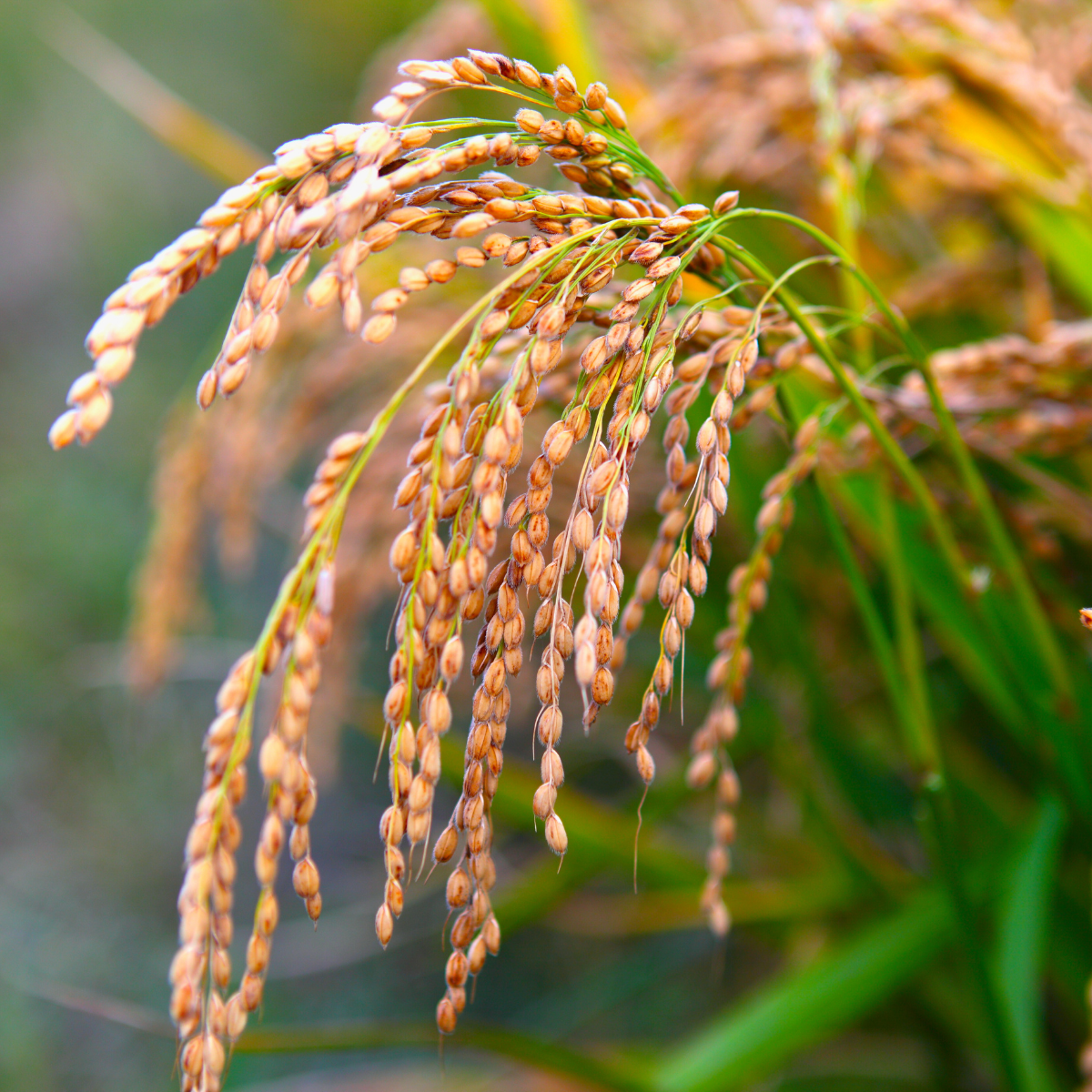
Salt stress is a major challenge for crop productivity, and plants respond not only by changing which genes they express, but also how those RNAs are processed, modified, and translated into proteins. In this study, the authors used nanopore direct RNA sequencing (DRS) and ribosome profiling to simultaneously map changes in the epitranscriptome and the translatome in seedlings of Oryza sativa (rice) under salt stress. DRS revealed that, early during salt exposure, global levels of the RNA modification N6‑methyladenosine (m⁶A) dropped, while N5‑methylcytosine (m⁵C) increased. These changes were especially prominent in genes involved in oxidation–reduction (redox) processes. Interestingly, changes in m⁵C correlated positively with transcript abundance, whereas m⁶A correlated negatively.
Ribosome profiling further showed that for many of these modified RNAs, translation efficiency significantly increased under salt stress, meaning that not only were RNAs modified and differentially abundant, but they were more actively translated into proteins. Additionally, the authors found thousands of transcripts whose poly(A) tail length changed under salt stress, often increasing and that modified RNAs tended to gain longer tails. Altogether, the study paints a complex, multilayered picture: under salt stress, rice adjusts gene expression not only at the transcriptional level, but via dynamic RNA modification, altered poly(A)-tail length and enhanced translation, especially for genes relevant to stress adaptation. The work highlights the critical role of post-transcriptional and translational regulation in plant stress responses, and shows how ribosome profiling can uncover translational adjustments that conventional RNA-seq would miss.
Learn more about EIRNABio’s ribosome profiling services here.