Translatomics for tRNA, rRNA, and mRNA decay

Recent Publications Harnessing the Power of Translatomics
Every week we provide a digest of a small number of recent interesting papers in the field of translatomics.
In this week’s Sunday papers,
- Hermann et al. demonstrate how tRNA modification influences on translational output.
- Salsi et al. uncover a new role of specific lncRNAs in rRNA regulation.
- Zhu et al. reveal the impact distinct tRNAs have over the process of mRNA decay.
mTORC1 cooperates with tRNA wobble modification to sustain the protein synthesis machinery
Nature Communications, 2025
Hermann, J., Borteçen, T., Kalis, R., Kowar, A., Pechincha, C., Vogt, V., Schneider, M., Helm, D., Krijgsveld, J., Loayza-Puch, F., Zuber, J and Palm W.
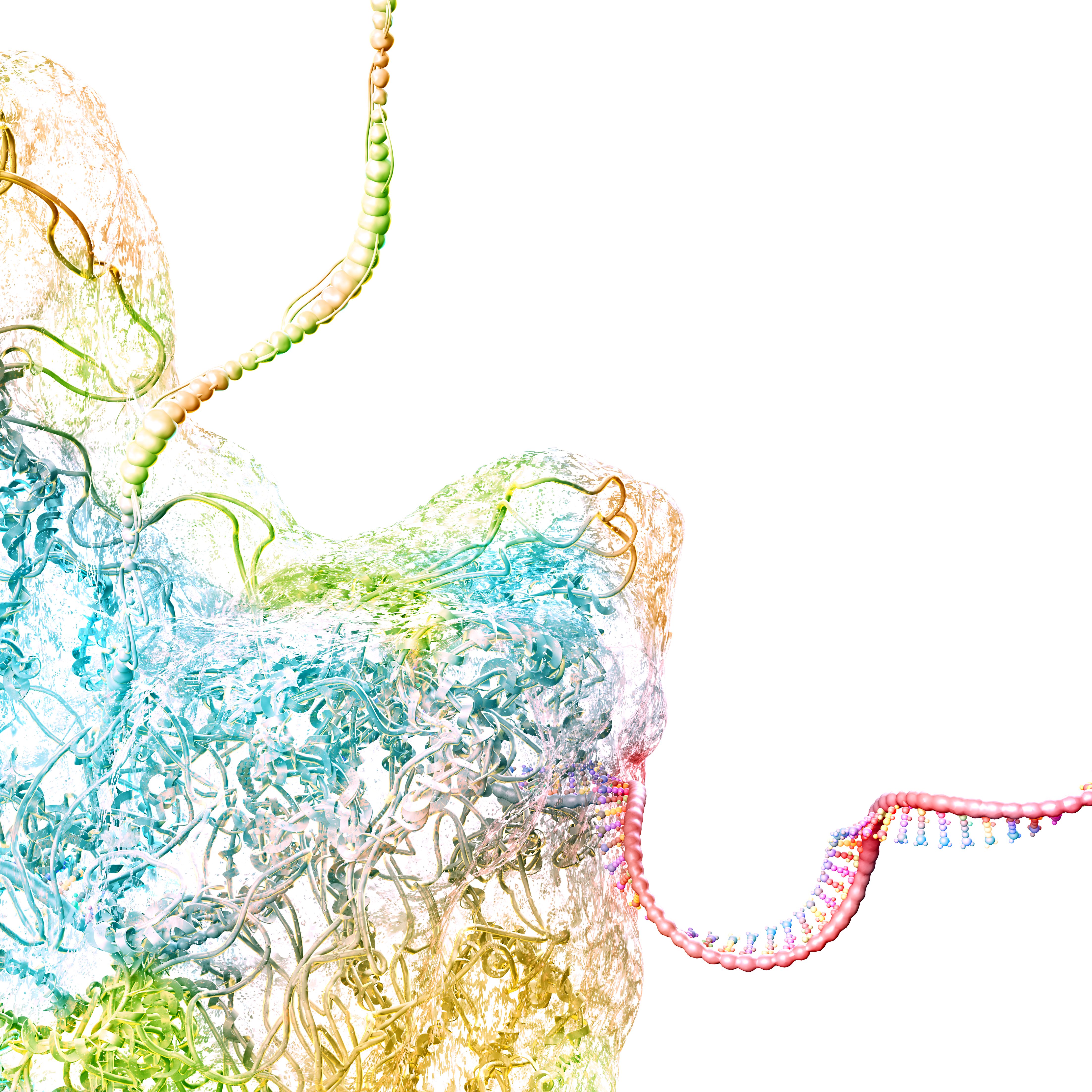
Protein production is hugely resource-intensive, and cells tightly regulate the machinery that makes proteins—ribosomes, tRNAs, mRNAs and translation factors. mTORC1 is a key growth-related kinase that boosts protein synthesis by activating translation and increasing production of ribosomal components, especially mRNAs with 5′ TOP motifs. Another layer of control comes from chemical modifications on tRNAs, particularly U34 wobble-uridine modifications made by U34-enzymes, Elongator and Ctu. These modifications improve decoding of specific lysine, glutamine and glutamate codons, and are vital for efficient translation. When disrupted, they contribute to stress sensitivity, neurological disorders, and cancer, highlighting their role in shaping the proteome. However, whether these modification factors interact with other members of the translational machinery, or to what degree remains unknown, and this study addresses these questions.
A CRISPR screen in murine pancreatic cancer cells treated with the mTOR inhibitor torin 1 identified tRNA wobble uridine-modifying enzymes including Elp2/3/6 and Ctu1/2 as essential for cell proliferation under mTORC1 suppression. Inducible knockouts of Ctu1 or Elp3 caused moderate growth defects but markedly sensitized cells to mTORC1 inhibitors, a phenotype rescued by cDNA re-expression and confirmed in multiple cell lines and in orthotopic pancreatic tumors. Quantitative nascent proteomics (QuaNPA) revealed a global decrease in newly synthesized proteins in U34-enzyme-deficient cells, with ribosomal proteins most affected. Ribosome profiling and differential ribosome codon reading (diricore) analysis showed increased ribosomal occupancy at AAA, CAA, and GAA codons, linking translational defects to codon-specific tRNA modification. Combining U34-enzyme loss with mTORC1 inhibition synergistically depleted ribosomal proteins and suppressed puromycin incorporation, demonstrating that tRNA modifications and mTORC1 signalling converge to sustain ribosomal protein synthesis and overall translational capacity. Synonymous codon mutagenesis confirmed the codon-dependent requirement of U34-enzymes for ribosomal protein expression.
Learn more about EIRNABio’s ribosome profiling services here.
Nucleolar FRG2 lncRNAs inhibit rRNA transcription and cytoplasmic translation, linking FSHD to dysregulation of muscle-specific protein synthesis
Nucleic Acids Research, 2025
Salsi, V., Losi, F., Fosso, B., Ferrarini, M., Pini, S., Manfredi, M., Vattemi, G., Mongini, T., Maggi, L., Pesole, G., Henras, A.K., Kaufman, P.D., McStay, B. and Tupler, R.

Tandemly arrayed repeats of large size (TARIs) or macrosatellites make up about 2% of the genome, but only recent long-read, telomere-to-telomere assemblies have revealed their structure and potential roles in genome regulation. One such array, D4Z4 at chromosome 4q35, is central to facioscapulohumeral muscular dystrophy (FSHD), where contraction of its repeat units correlates imperfectly with disease severity and penetrance. D4Z4 deletions reshape local chromatin and deregulate several nearby genes, including FRG2A, which is highly responsive to stress, differentiation to myotubes, and repeat number. Despite its strong and disease-linked expression changes, the function and localization of FRG2A remain unknown—prompting the authors to investigate it directly.
This study characterizes the FRG2 lncRNA family, expanded to 14 paralogs in the T2T-CHM13 human genome. Four paralogs (FRG2A, B, C, C-1) have coding potential, but protein expression was undetectable via FLAG-tagging, immunoblotting, ribosome profiling, and proteomics, indicating these are primarily noncoding RNAs. FRG2 transcripts are chromatin-associated, enriched in heterochromatic regions, nucleoli, and interact in trans with centromeres and rDNA arrays, as shown by ChIRP-seq and RNA-FISH. FRG2A/B overexpression in FSHD myoblasts increases centromere-nucleolar associations and represses rDNA, reducing nucleolar size and protein synthesis. Mass spectrometry revealed compensatory upregulation of ribosomal proteins during myoblast-to-myotube differentiation, yet muscle-specific proteins remained deficient. Overall, FRG2 lncRNAs act as nucleolar regulators, linking heterochromatin organization to ribosome biogenesis, with overexpression in FSHD disrupting rRNA transcription, protein synthesis, and muscle-specific proteome, suggesting a novel pathogenic mechanism.
Learn more about EIRNABio’s ribosome profiling services here.
Specific tRNAs promote mRNA decay by recruiting the CCR4-NOT complex to translating ribosomes
Science, 2024
Zhu, X., Cruz, V.E., Zhang, H., Erzberger, J.P. and Mendell, J.T.

Messenger RNA (mRNA) stability and translation are tightly regulated by the poly(A) tail and its binding proteins, while the CCR4-NOT complex acts as the major cytoplasmic deadenylase, promoting mRNA decay. Recruitment of CCR4-NOT to specific transcripts can occur via RNA-binding proteins, microRNAs, or directly at translating ribosomes, particularly when ribosomes stall at non-optimal codons. In yeast and in vitro mammalian systems, such stalling allows CNOT3 to engage empty ribosomal E-sites, linking slow translation to accelerated mRNA degradation. The authors used selective ribosome profiling in human cells to map transcriptome-wide features that drive CNOT3 recruitment, aiming to understand how translation efficiency controls mRNA turnover.
Using sucrose density gradient fractionation and RNase-treated immunoprecipitation in HEK293T cells, the authors showed that human CNOT3 directly associates with translating ribosomes. Selective ribosome profiling revealed that CNOT3 recruitment is strongly linked to the ribosomal P-site, particularly with arginine codons CGG, CGA, and AGG, rather than A-site codon optimality. SLAM-seq demonstrated that mRNAs enriched in these codons, including mitochondrial ribosomal protein transcripts, are destabilized by CNOT3, and reporter assays confirmed that P-site arginine codons are sufficient to trigger decay. In vitro translation of engineered mRNAs recapitulated CNOT3 recruitment, enabling cryo-EM structural analysis, which revealed that CNOT3 binds the E-site and interacts with the D- and anticodon stems of the P-site tRNA. Mutagenesis of tRNA D-arm and anticodon stem elements pinpointed the U13:A22:A46 triplet as critical for recruitment, while extra nucleotides in the D-loop α element blocked binding. These results show that slow decoding combined with specific P-site tRNA features drives co-translational CNOT3-mediated mRNA decay in the mammalian cells.
Learn more about EIRNABio’s ribosome profiling services here.