

Translatomics for virus, mRNA, and RNA G-quadruplexes

Recent Publications Harnessing the Power of Translatomics
Every week we provide a digest of a small number of recent interesting papers in the field of translatomics.
In this week’s Sunday papers,
- Zhang et al. find that the giant virus APMV overcomes a significant codon usage mismatch with its amoeba host by creating a specialized subcellular environment near the viral factory for efficient translation, rather than altering the global host tRNA pool.
- Rozman et al. find that the vaccine-modified nucleoside N1-methylpseudouridine increases protein yield by promoting translation initiation and increasing ribosome load, despite locally slowing elongation through structural alterations in the ribosomal decoding centre.
- Li et al. find that the RNA-binding protein RBM4 interacts with RNA G-quadruplexes immediately downstream of codon repeats to induce ribosome stalling, thereby promoting efficient +1 ribosomal frameshifting in the human genome.
A giant virus forms a specialized subcellular environment within its amoeba host for efficient translation
Nature Microbiology, 2026.
Zhang, R., Mayer, L., Hikida, H., Shichino, Y., Mito, M., Willemsen, A., Iwasaki, S. and Ogata, H.
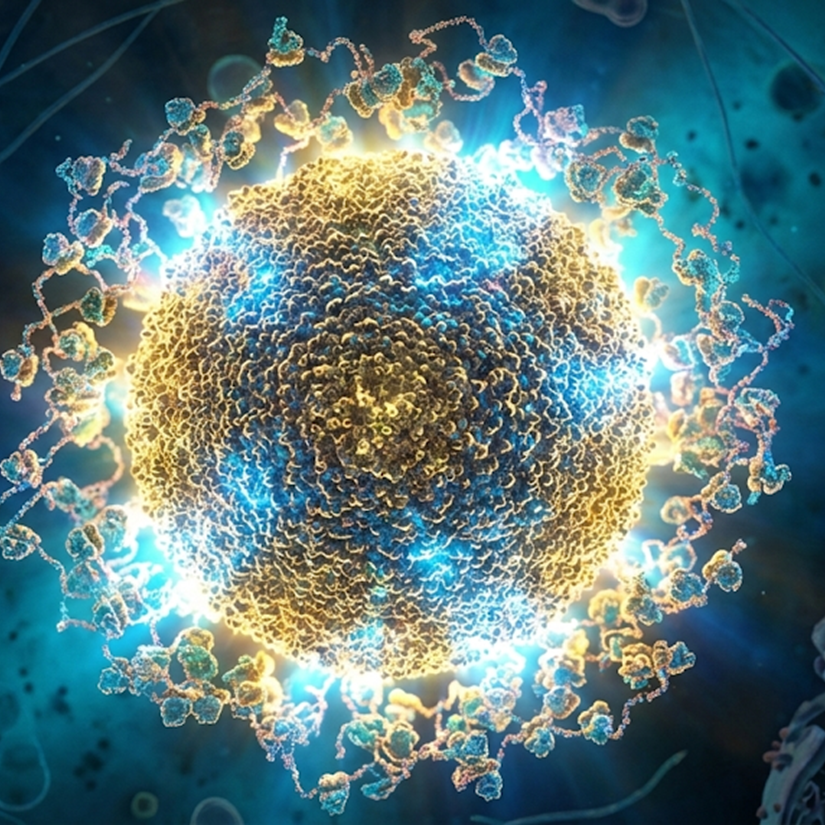
This study investigates how Acanthamoeba polyphaga mimivirus (APMV), which possesses an AT-rich genome, efficiently replicates within a GC-rich amoeba host despite a significant mismatch in codon usage. The consequent difference in the host’s tRNA supply and the demand by the virus raises questions on how the virus overcomes this challenge for efficient gene expression. The researchers reveal that APMV overcomes this barrier by establishing a specialized subcellular environment for “local translation” rather than modifying the host’s global resources. Deep sequencing provided critical insights into this mechanism. RNA-seq data showed that viral transcripts progressively dominated the host cell, accounting for up to 85% of reads by late infection (8 hours post-infection), while host gene expression largely shut down. Despite this massive transcriptional shift, modification-induced misincorporation tRNA sequencing (mim-tRNA-seq) indicated that the global tRNA pool remained stable and host-dominated throughout infection, with viral-encoded tRNAs contributing less than 2% to the total pool.
Ribosome profiling (Ribo-seq) analysis further demonstrated that viral mRNAs were translated smoothly without significant ribosome pausing, suggesting the codon mismatch did not hinder elongation. However, viral translation efficiency dropped significantly at late stages, likely because the overwhelming abundance of viral mRNA eventually saturated the host translation machinery. Microscopy confirmed that viral mRNAs and newly synthesized proteins spatially co-localized at the periphery of the viral factory. This suggests the virus creates a distinct, heterogeneous environment to facilitate efficient protein synthesis despite the unfavourable global host conditions. By demonstrating how giant viruses overcome codon usage mismatches through the creation of specialized “mRNA translation rooms”, this research can inform synthetic biology and gene therapy platforms, where ensuring efficient translation of foreign genetic material within a host cell is a critical bottleneck.
Learn more about EIRNABio’s ribosome profiling and tRNA-seq services here.
𝘕¹-Methylpseudouridine directly modulates translation dynamics
Nature, 2026
Rozman, B., Broennimann, K., Rajan, K.S., Nachshon, A., Saha, C., Arazi, T., Mohan, V., Geiger, T., Wollner, C.J., Richner, J.M., Westhof, E., Yonath, A., Bashan, A. and Stern-Ginossar, N.
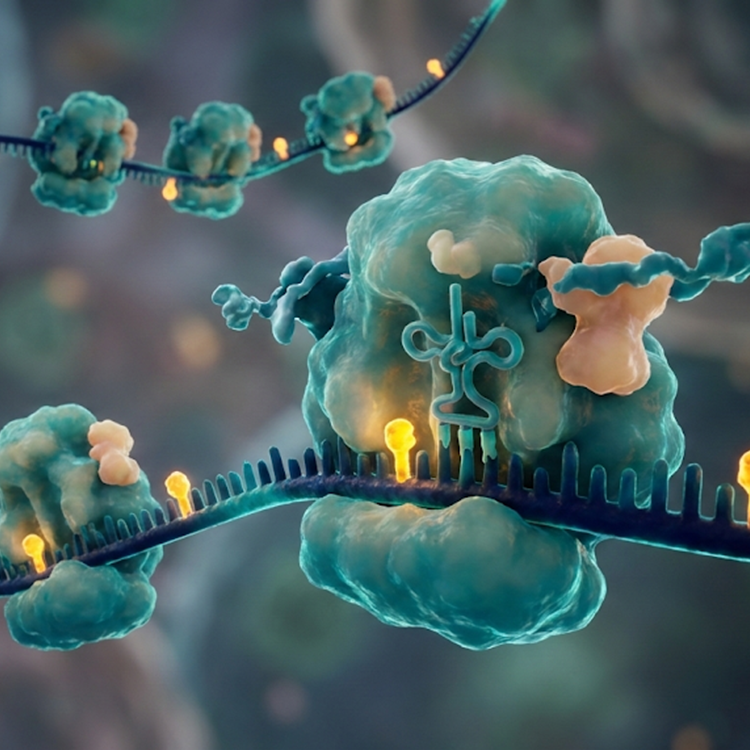
This study elucidates how N1-methylpseudouridine (m1Ψ), a critical component of effective mRNA vaccines, enhances protein synthesis by altering translation dynamics. As Ribo-seq provides sub-codon resolution , the authors were able to reveal that m1Ψ directly slows elongation at specific uridine-rich sequences, particularly NNU and NUN codon pairs. Structural analysis via cryo-EM confirms that this modification changes the geometry of the ribosomal decoding centre, providing a mechanical basis for the observed pauses.
Despite localised elongation slowing down, polysome profiling demonstrated a significant shift of modified mRNAs into heavier polysome fractions, indicating a higher number of ribosomes actively translating each transcript compared to unmodified versions. Crucially, RNA-seq data showed no significant difference in mRNA abundance between modified and unmodified transcripts, ruling out increased mRNA stability as the primary driver of high protein output. Instead, the findings demonstrate that m1Ψ significantly enhances translation initiation, which overrides the effects of elongation slowdown to produce higher protein yields. The study concludes that this enhancement is sequence-context dependent, exerting the strongest impact on mRNAs containing non-optimal codons.
Learn more about EIRNABio’s ribosome profiling, polysome profiling, and tRNA-seq services here.
RNA G-quadruplexes promote codon repeat-associated ribosomal frameshifting in human genes
Nucleic Acids Research, 2026.
Li, X., Li, Z., Zhou, Y., Gong, S., Chen, Z., Li, J., Guo, M., Gu, X., Li, F., Wei, J., Zhong, T., Yin, T., Li, T., Xing, Y., Yang, X., Xu, L., Lai, F., Dang, Y., and Ren, G.
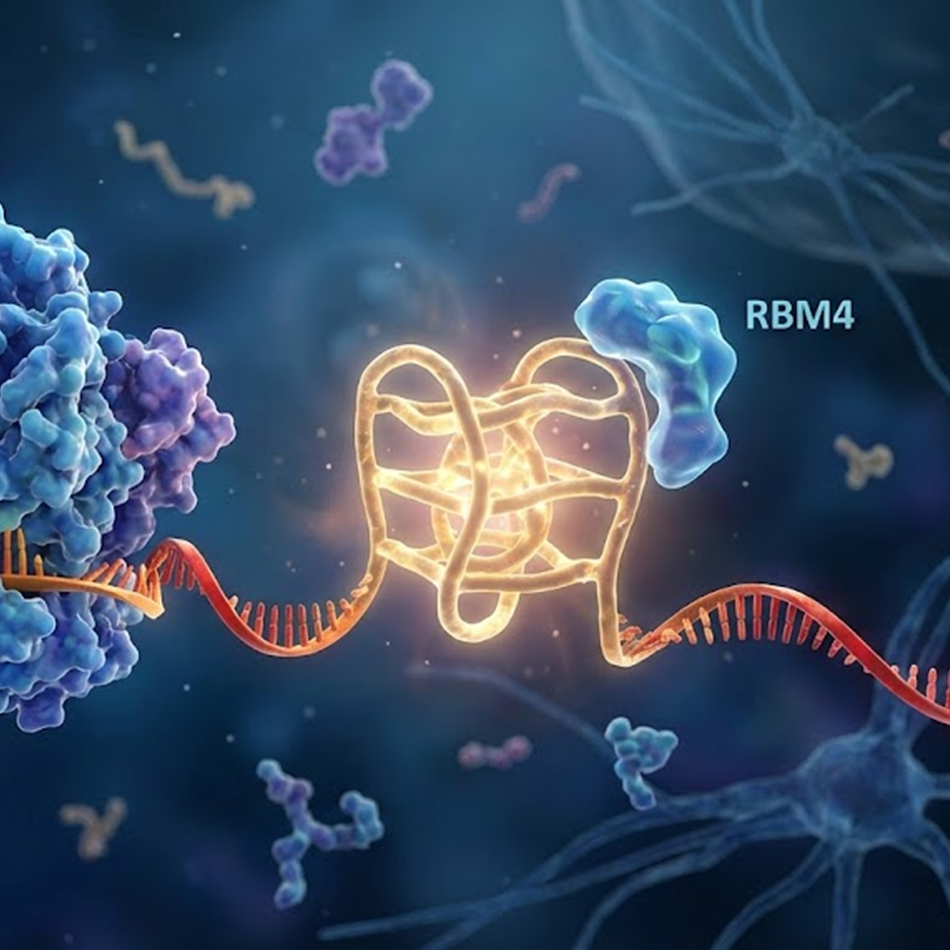
This study elucidates the molecular mechanism underlying codon repeat-associated ribosomal frameshifting (CRFS) in human genes, using HDAC1 as a primary model. Through whole-genome CRISPR screening, the authors identified RBM4 as a key RNA-binding protein that enhances +1 ribosomal frameshifting. The research demonstrates that RBM4 promotes this process by binding to RNA G-quadruplex (rG4) structures located immediately downstream of codon repeats.
Crucially, ribosome profiling (Ribo-seq) analysis provided mechanistic insight by revealing elevated ribosome density upstream of putative rG4 motifs and RBM4-binding sites. These Ribo-seq results suggest that RBM4-bound rG4 structures function as roadblocks that induce ribosome stalling, a process central to triggering the frameshift.
The study further establishes the broad relevance of this mechanism, reporting a significant enrichment of rG4s downstream of codon repeats across the human genome. Validated by rG4-stabilizing and destabilizing treatments, the authors show that these structures can act as universal cis-elements to promote frameshifting in diverse genetic contexts, expanding the known landscape of translational recoding in humans. By identifying RNA G-quadruplexes (rG4s) as stimulators of ribosomal frameshifting, this study contributes to our understanding of proteome diversity and gene regulation, offering potential therapeutic targets for diseases linked to codon-repeat expansions and translational errors, such as neurodegenerative disorders.
Learn more about EIRNABio’s ribosome profiling services here.

