

Translatomics for hidden microproteins in cancer and development

Recent Publications Harnessing the Power of Translatomics
Every week we provide a digest of a small number of recent interesting papers in the field of translatomics.
In this week’s Sunday papers,
- Gugnoni et al. demonstrate that Linc00941 sustains mesothelioma aggressiveness by promoting ribogenesis and cMYC translation.
- Li et al. reveal unannotated microproteins in the human placenta, identifying XRCC6P1 as a novel repressor of translation.
- Meng et al. uncover the cryptic lncRNA-encoded microprotein TPM3P9, which drives oncogenic RNA splicing and tumorigenesis in kidney cancer.
Together, these studies highlight hidden layers of the proteome and their roles in cancer and development.
Linc00941 fuels ribogenesis and protein synthesis by supporting robust cMYC translation in malignant pleural mesothelioma
Cancer Letters, 2024
Mila Gugnoni, Eugenia Lorenzini, Federica Torricelli, Benedetta Donati, Veronica Manicardi, Emanuele Vitale, Silvia Muccioli, Simonetta Piana, Filippo Lococo, Rafaella Zamponi, Paolo Gandellini, Alessia Ciarrocchi

This publication investigates how the long non-coding RNA Linc00941 drives the aggressive behaviour of malignant pleural mesothelioma (MPM), a rare and lethal cancer associated with asbestos exposure. The authors demonstrate that Linc00941 is linked to poor prognosis across multiple cancers. In MPM cells, Linc00941 promotes survival and oncogenicity by enhancing ribosome biogenesis and global protein synthesis. Mechanistically, Linc00941 binds to the translation initiation factor eIF4G, which leads to selective translation of the cMYC oncogene. Elevated cMYC then amplifies the expression of downstream genes critical for translational machinery expansion.
In a clinical cohort of 97 mesothelioma patients, high Linc00941 expression strongly correlated with reduced survival, underscoring its prognostic value. By elucidating Linc00941’s role in selectively prioritizing oncogene synthesis, the study resolves previously conflicting reports of the lncRNA’s varied functions. Thus, positioning Linc00941 as a potential prognostic biomarker and therapeutic target, paving the way for novel interventions in MPM treatment.
Learn more about EIRNABio’s ribosome profiling services here.
Proteomic Profiling of Unannotated Microproteins in Human Placenta Reveals XRCC6P1 as a Potential Negative Regulator of Translation
Journal of Proteome Research, 2024
Qiong Li, Fanrong Liu, Xiaoyu Ma, Feifei Chen, Ziying Yi, Yangyang Du, Anxin Huang, Chenyang Zhao, Da Wang, Yanran Chen & Xiongwen Cao
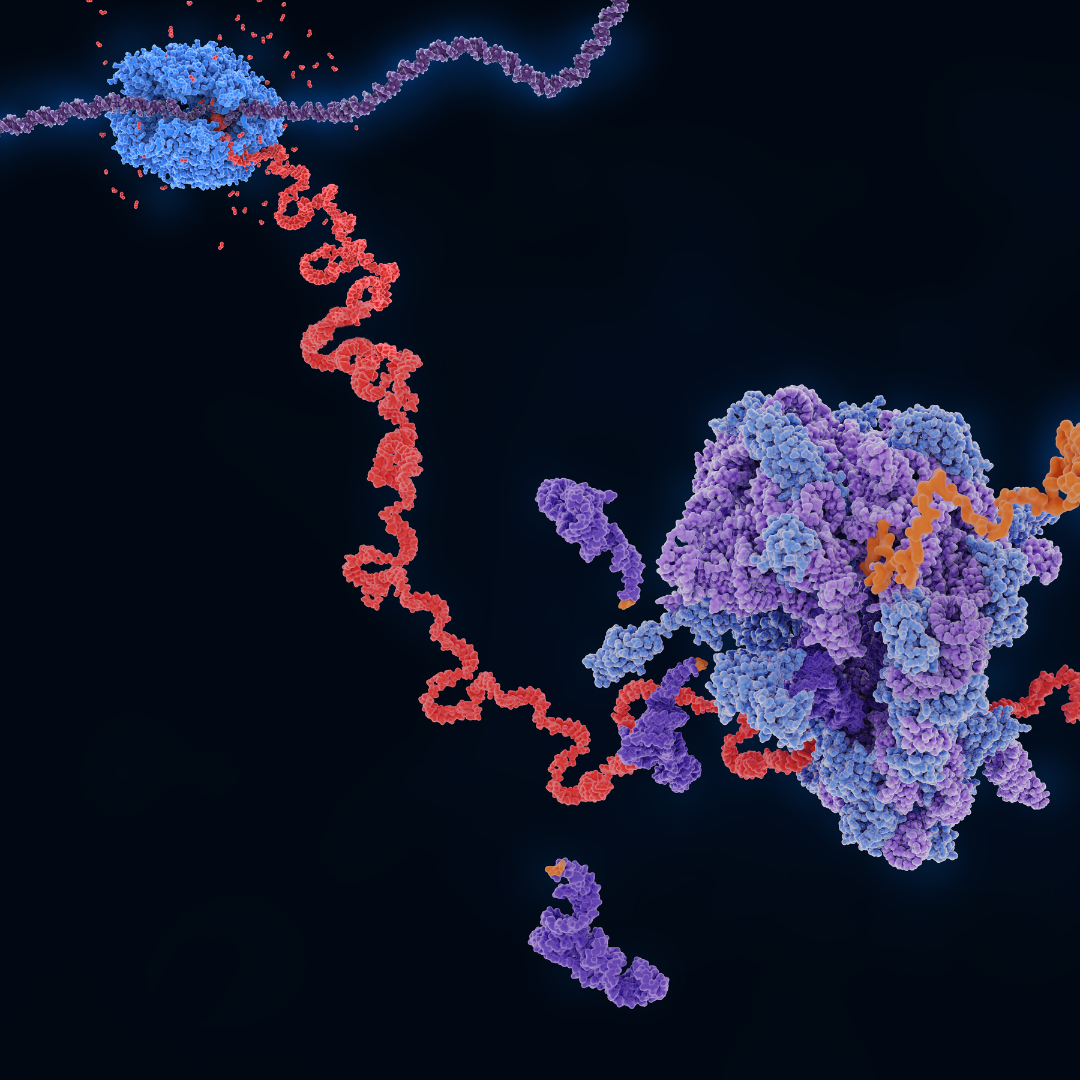
In this paper, the authors investigate the landscape of small, previously unannotated proteins in human placental tissue and uncover a novel regulatory role in translation control. Thanks to ribosome profiling and mass spectrometry, thousands of previously unannotated microproteins—translated from sm/alt-ORFs (translons) have been identified in mammalian cells. In this study, the authors use a proteomics approach to identify 52 unannotated microproteins in human placentas from healthy individuals and preeclampsia patients. Five of these were validated via overexpression in heterologous cell lines, confirming their capacity for translation.
A key discovery is the microprotein XRCC6P1, which was shown to associate with the translation initiation factor eIF3. When overexpressed, XRCC6P1 acts as a negative regulator of translation, reducing overall protein synthesis.
This work illuminates a hidden proteomic layer in the placenta, enriching our understanding of sm/alt-ORF–encoded microproteins in developmental biology. The functional characterization of XRCC6P1 as a translational repressor not only deepens insight into placental biology but also suggests possible roles in pregnancy disorders like preeclampsia. By uncovering previously unseen microproteins and revealing their regulatory potential, the study paves the way for future investigation into placenta-specific protein functions and their implications in maternal-foetal health.
Learn more about EIRNABio’s ribosome profiling and translon explorer services here.
The cryptic lncRNA-encoded microprotein TPM3P9 drives oncogenic RNA splicing and tumorigenesis
Signal Transduction and Targeted Therapy, 2025
Kun Meng, Yuying Li, Xiaoyi Yuan, Hui-Min Shen, Li-Ling Hu, Danya Liu, Fujin Shi, Dandan Zheng, Xinyu Shi, Nengqiao Wen, Yun Cao, Yun-Long Pan, Qing-Yu He & Chris Zhiyi Zhang
The paper by Meng et al. sheds light on how coding elements hidden within long noncoding RNAs (lncRNAs) can promote cancer progression. Although lncRNAs are often thought to function through RNA-mediated mechanisms, many harbour small open reading frames (sORFs) that give rise to biologically active microproteins.
In this study, the authors identified TPM3P9, a previously unrecognized microprotein encoded by the lncRNA tropomyosin 3 pseudogene 9, as an oncogenic driver in clear cell renal cell carcinoma (ccRCC). Using a combination of ribosome-nascent chain complex-sequencing (RNC-seq)and proteomics analysis, TPM3P9 was validated as a translated product. Functional assays revealed that TPM3P9 enhances proliferation and tumorigenic potential of ccRCC cells. Mechanistically, TPM3P9 binds the RNA recognition motif (RRM1) of the splicing regulator RBM4, preventing it from promoting exon skipping in TCF7L2 transcripts. This favours production of the long isoform, TCF7L2-L, which recruits SAM68 to activate NF-κB signalling, ultimately driving expression of the transcription factor RELB.
Clinical analysis showed that TPM3P9 is upregulated in ccRCC tumours and correlates positively with TCF7L2-L and RELB levels. Patients with high TPM3P9 or low RBM4 expression displayed significantly worse survival outcomes.
By combining translatomics with functional studies, this work demonstrates how a cryptic lncRNA-encoded microprotein reprograms splicing and signalling to promote oncogenesis. TPM3P9 represents both a biomarker of poor prognosis and a potential therapeutic target, while reinforcing the importance of systematically uncovering microproteins hidden within the noncoding genome.
Learn more about EIRNABio’s ribosome profiling and translon explorer services here.

