

Translatomics for pseudouridine, tRNA and multiple myeloma

Recent Publications Harnessing the Power of Translatomics
Every week we provide a digest of a small number of recent interesting papers in the field of translatomics.
In this week’s Sunday papers,
- Xu, H. et al. present a comprehensive Ψ modification atlas that links individual enzymes with modification patterns.
- Rübsam, F.N.M. et al. introduce MoDorado, a direct RNA sequencing approach to detect a range of tRNA modifications.
- Yi, B. et al. find tRNA-derived fragments that may be molecular biomarkers for multiple myeloma.
A comprehensive tRNA pseudouridine map uncovers targets dependent on human stand-alone pseudouridine synthases
Nature Cell Biology, 2025
Xu, H., Kong, L., Li, M., Pisignano, G., Cheng, J., Feng, F., Mehdipour, P. and Song, C.-X.

Pseudouridine (Ψ) is a prevalent RNA modification that influences RNA stability, decoding accuracy, and translation efficiency. It is frequently found in tRNAs as well as rRNA and snRNAs. It is known to be added pos-transcriptionally by pseudouridine synthases (PUS) – 13 of which have been annotated in the human genome. Yet the enzyme-target relationships for most human PUS proteins remained poorly defined prior to this work.
In this study, nine PUS enzymes were either knocked out or down in HCT116 cells, and the authors then mapped Ψ positions using 2-bromoacrylamide-assisted cyclization sequencing (BACS). This sequencing approach captures Ψ-induced mutation signatures, enabling precise mapping of modification sites and quantitative assessment of stoichiometry across cytosolic and mitochondrial tRNA species.
This approach revealed that TRUB1 and PUS10 function redundantly to catalyse the highly conserved Ψ55 modification in cytosolic tRNAs. It further demonstrated that some predicted PUS enzymes including RPUSD3 and TRUB2, show little or no activity in vivo. PUS3 and PUSL1 were shown to catalyse Ψ38–40 sites in cy-tRNAs and mitochondrial tRNAs.
Integration of these tRNA-seq datasets produced a comprehensive Ψ modification atlas that links individual enzymes with modification patterns and stages of tRNA processing. Thanks to this mapping, it was shown that different PUS enzymes introduce Ψ modifications at distinct stages of pre-tRNA processing. Overall, this work underscores the power of targeted RNA sequencing to decode tRNA modification landscapes and clarifies the enzymatic specificity of human pseudouridine synthases across the tRNA transcriptome.
MoDorado: enhanced detection of tRNA modifications in nanopore sequencing by off-label use of modification callers
Nucleic Acids Research, 2025
Rübsam, F.N.M., Liu-Wei, W., Sun, Y., Patel, B.I., van der Toorn, W., Piechotta, M., Dieterich, C., von Kleist, M. and Ehrenhofer-Murray, A.E.
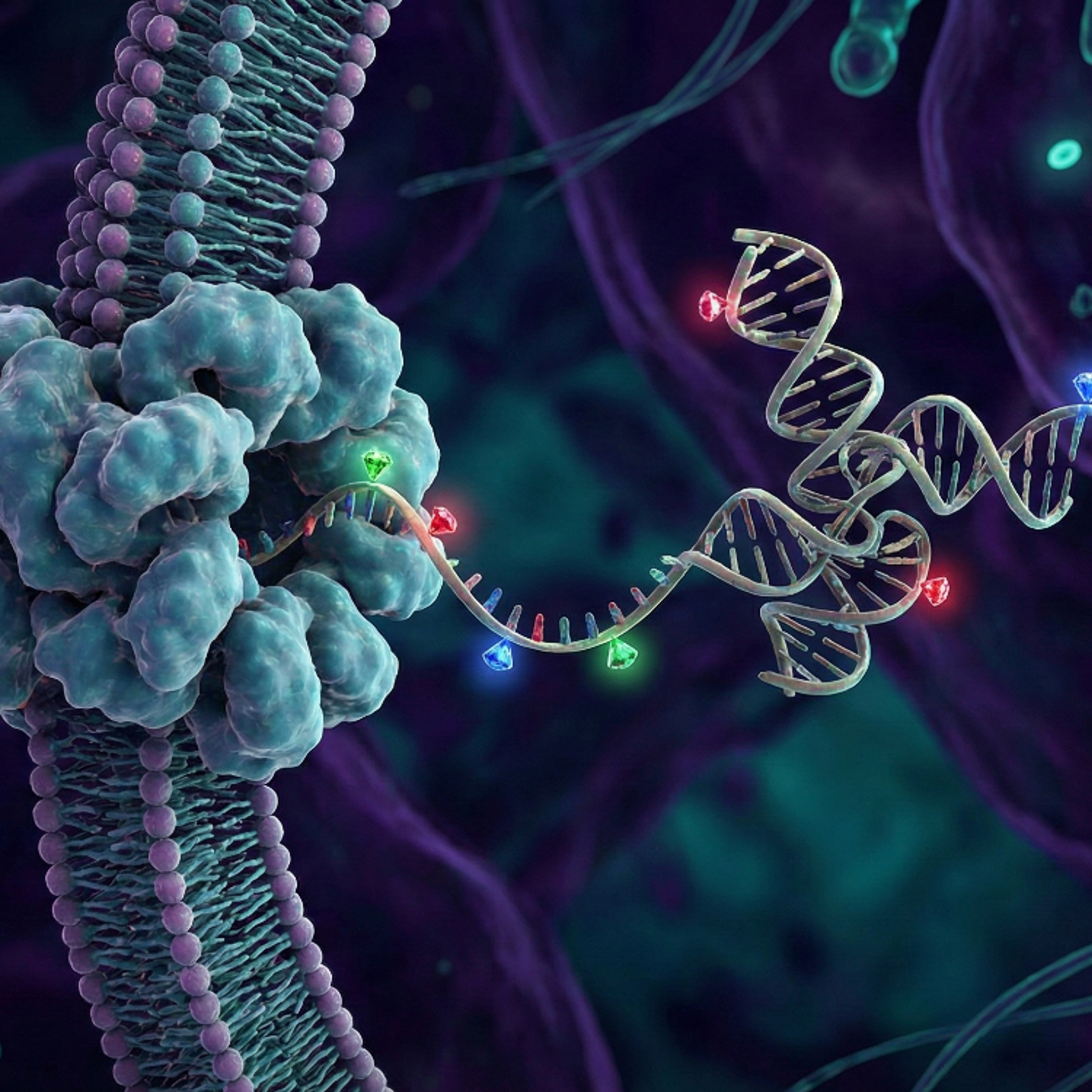
The authors present MoDorado, an advanced analytical framework that leverages nanopore direct RNA sequencing (dRNA-seq) to detect and map a broad range of tRNA modifications, overcoming challenges in identifying modifications within highly modified tRNA molecules.
Oxford Nanopore direct RNA-seq sequences RNA molecules directly by threading them through a biological nanopore, producing characteristic ionic current changes that reflect the nucleotide sequence and can signal chemical modifications. Using the Oxford Nanopore Technologies RNA kit (SQK-RNA004) and its Dorado basecaller with pre-trained models for pseudouridine (Ψ), N⁶-methyladenosine (m⁶A), 5-methylcytosine (m⁵C), and inosine, the authors first applied these models “on-label” to predict Ψ sites in tRNAs from Schizosaccharomyces pombe.
Validation against gene deletion strains allowed assignment of modification sites to specific pseudouridine synthases, including newly identified Ψ8 (Pus7-dependent) and Ψ22 (Pus1-dependent) positions. Beyond the standard use of basecaller models, MoDorado implements an “off-label” analysis strategy that exploits differences in modification probability score distributions from pre-trained models to flag additional modification types not directly targeted in model training. This approach enabled detection of seven further modifications, including non-canonical uridines (ncm⁵U, mcm⁵U, mcm⁵s²U), m⁷G, queuosine, m¹A, and i⁶A, thus expanding the tRNA modification landscape.
Overall, this work demonstrates how combining nanopore direct tRNA-seq with innovative computational analysis (MoDorado) provides enhanced, multiplexed detection of tRNA chemical modifications, enabling comprehensive mapping of modification patterns and their enzymatic origins in a transcriptome-wide context.
Peripheral blood tRNA-derived fragments as novel noninvasive biomarkers for diagnosis and prognostic stratification in multiple myeloma
Frontiers in Immunology, 2025
Yi, B., Gao, Y., Huang, Y., Guo, K., Liu, R., Zeng, M., Xu, H. and Lei, M.

Multiple myeloma (MM) is a malignant hematological tumor characterized by abnormal clonal proliferation of plasma cells. Currently available diagnostic methods have limitations in sensitivity particularly at early stages, so alternative molecular biomarkers are required. The authors focused on tRNA-derived fragments (tRFs), which are generated from tRNAs through specific enzymatic cleavage and have been shown to regulate gene expression, participating in epigenetic modifications, and modulating signalling pathways in cancer.
Small RNA-seq (tRNA-seq) has been utilised to characterise tRFs expression profiles in peripheral blood mononuclear cells (PBMCs) from 22 newly diagnosed MM patients and 19 healthy donors. Selected candidates were subsequently validated by quantitative RT-PCR. 148 significantly upregulated and 63 downregulated tRFs were detected. Two of them, Other-1_19-tRNA-SeC-TCA-1 and Other-36_54-tRNA-Met-CAT-2-M4 demonstrated excellent diagnostic performance. GO and KEGG functional enrichment analysis revealed that differentially expressed tRFs were primarily involved in regulating signalling pathways such as TGF-β, PI3K-Akt, and AMPK, and were closely associated with thyroid hormone metabolism. Renal impairment is known to be a common and severe complication of MM. The authors found that increased expression of Other-22_52-tRNA-Gly-GCC-1-M3 was significantly correlated with renal insufficiency suggesting its potential as a novel biomarker for assessing renal injury risk. Integration of the miRanda and TargetScan algorithms predicted thousands of potential target genes for regulated tRFs suggesting that they may participate in multiple regulatory pathways.
Overall, this study reported aberrant tRFs expression profiles in MM and identified Other-22_52-tRNA-Gly-GCC-1-M3, Other-36_54-tRNA-Met-CAT-2-M4, and Other-1_19-tRNA-SeC-TCA-1 as promising noninvasive diagnostic biomarkers, with Other-22_52-tRNA-Gly-GCC-1-M3 showing particular value for renal injury assessment.