
Translatomics for Queuosine, ALS and cancer

Recent Publications Harnessing the Power of Translatomics
Every week we provide a digest of a small number of recent interesting papers in the field of translatomics.
In this week’s Sunday papers,
- Zbihley, O.N.P. et al. find that increased levels of Queuosine tRNA modification at position 34 could specifically enhance ribosomal protein synthesis.
- Neeves, J. et al. characterize the elevated levels of alternative cytoplasmic SFPQ in ALS.
- Ramirez-Moya, J. et al. find that ADAT2/3-mediated tRNA editing is a critical regulator of codon-biased translation in cancer cells.
Mammalian queuosine tRNA modification impacts translation to enhance cell proliferation and MHC-II expression
Journal of Molecular Biology, 2025
Zbihley, O.N.P. , Johnson, K., , Frietze, L.R., et al.

Queuosine (Q) is a highly modified guanosine derivative found at the wobble position (position 34) of tRNAs that decode Tyr, His, Asn, and Asp. In eukaryotes, cells cannot synthesize the queuine base; instead, queuine must be obtained from dietary sources or from the gut microbiome. Functionally, Q‐modification alters mRNA decoding efficiency by shifting codon-reading preferences of the affected tRNAs, improving translation at certain codons.
Experimental comparisons of cells differing in tRNA Q‐modification levels—specifically HEK293T cells and murine bone marrow-derived dendritic cells (BMDCs)—reveal that elevated Q-modification correlates with enhanced proliferation. Through tRNA-sequencing (tRNA-seq), researchers discovered that Q34 modification is associated with increased levels of N2,N2-dimethylguanosine (m²₂G) modification. The m²₂G mark contributes to tRNA structural rigidity and thermal stability, and plays roles in modulating translation. However, high Q levels did not produce consistent changes in the steady-state abundance of tRNAs, nor in their charging (aminoacylation) in either HEK293T cells or BMDCs.
Transcriptome profiling via RNA-seq showed codon-dependent shifts in gene expression: in HEK293T cells, high Q levels were associated with a broadened preference for codons ending in C versus U. Notably, many mRNAs for ribosomal proteins in both human and mouse are enriched for C-ending over U-ending codons, suggesting that Q-modification could specifically enhance ribosomal protein synthesis in a codon‐dependent fashion. Further functional work in BMDCs revealed that culturing cells in queuine-depleted serum followed by queuine supplementation (0–1000 nM) modulates expression of MHC class II molecules. This finding uncovers a previously unrecognized connection between Q-modified tRNAs and dendritic cell immune function.
Learn more about EIRNABio’s RNA-seq and tRNA-seq services here.
An alternative cytoplasmic SFPQ isoform with reduced phase separation potential is up-regulated in ALS
Science Advances, 2025
Neeves, J., Howe, M.P, Ziff, O.J., Callaghan B. et al.
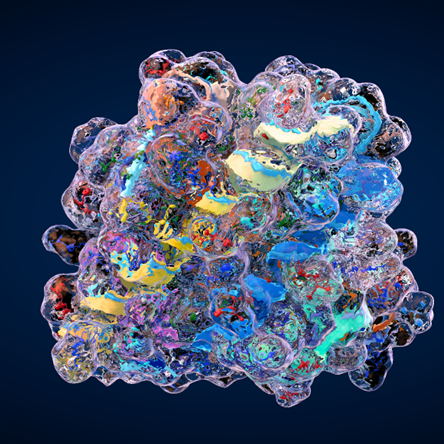
Amyotrophic lateral sclerosis (ALS) is a fatal neurodegenerative disorder with an average survival of only three to five years. Effective disease-modifying therapies still remain elusive, underscoring the urgency of uncovering mechanisms that drive ALS pathogenesis. One protein of growing interest is splicing factor proline- and glutamine-rich (SFPQ), an RNA-binding protein with broad regulatory roles in RNA metabolism. In ALS, SFPQ undergoes both altered expression and nuclear-to-cytoplasmic redistribution, though the molecular basis for these changes has been poorly understood.
In this study, the authors studied two previously uncharacterized SFPQ transcripts in ALS: an alternative isoform lacking a nuclear localization sequence, termed altSFPQ, and another transcript with intron retention, referred to as irSFPQ. Both contain premature termination codons, suggesting sensitivity to nonsense-mediated decay (NMD). Experimental validation showed that altSFPQ is indeed an NMD target, displaying strong upregulation upon translation inhibition, whereas irSFPQ was unaffected. Surprisingly, polysome profiling revealed that a significant portion of altSFPQ associates with heavy polysomes, indicating translational potential despite its NMD sensitivity. Further analyses confirmed that altSFPQ localizes predominantly in the cytoplasm.
Importantly, reduced canonical SFPQ levels were consistently linked to increased altSFPQ expression in both familial and sporadic ALS models, providing a mechanistic basis for the nuclear-to- cytoplasmic redistribution of SFPQ observed in patients. Moreover, the altSFPQ protein displayed impaired phase separation and altered protein-binding properties compared to canonical SFPQ, suggesting functional consequences for RNA metabolism and neuronal health. Together, these findings establish altSFPQ as a key molecular player in SFPQ dysregulation and provide new mechanistic insights into ALS pathogenesis.
Learn more about EIRNABio’s polysome profiling services here.
The tRNA editing complex ADAT2/3 promotes cancer cell growth and codon-biased mRNA translation
Journal of Molecular Biology, 2025
Ramirez-Moya, J., Antika, T.R., Liu, Q., Xiong, X., Ali, R., Gutierrez, A., Gregory, R.I.

Transfer RNAs (tRNAs) undergo extensive chemical modifications that influence their stability and function during protein synthesis. One key modification is adenosine-to-inosine (A-to-I) editing at position 34 (A34) in the anticodon loop, which expands codon recognition at the wobble site and ensures efficient mRNA translation. While this process is well established in normal cellular biology, its role in cancer has remained largely unexplored. In this study, the authors investigated the contribution of the ADAT2/3 deaminase complex—responsible for catalyzing A-to-I editing of tRNAs in humans—to cancer cell translation and growth.
Using tRNA-seq in control and ADAT2-knockdown LPS853 cells, the researchers observed a global reduction in A-to-I editing across multiple tRNA families. Interestingly, ADAT2 depletion did not affect the steady-state abundance of edited tRNAs, suggesting that editing rather than tRNA stability was primarily impacted. To assess translational consequences, Ribo-seq analysis revealed that ADAT2 knockdown caused widespread translational reprogramming, with 183 mRNAs upregulated and 146 downregulated. Importantly, downregulated transcripts were enriched for genes involved in cancer-associated processes such as proliferation, motility, and migration, consistent with an oncogenic role for ADAT2.
Codon usage analysis further demonstrated that transcripts with reduced translation efficiency were enriched in ADAT-sensitive codons, particularly NNC codons, indicating a codon-biased requirement for A-to-I editing in supporting efficient translation of growth-promoting genes. Proteomic profiling corroborated these findings, showing impaired translation, altered protein composition, and increased protein aggregation in ADAT2-deficient cells.
Together, these results identify ADAT2/3-mediated tRNA editing as a critical regulator of codon-biased translation in cancer cells and support its potential as a novel therapeutic target in oncology.