
Translatomics for eiF2A, rice, and synonymous mutations

Recent Publications Harnessing the Power of Translatomics
Every week we provide a digest of a small number of recent interesting papers in the field of translatomics.
In this week’s Sunday papers,
- Roiuk et al. use ribosome profiling to define the functional contribution of human eIF2A in translation initiation and uORF‑mediated control, using HeLa cells.
- Xi et al. analyze translational dynamics in an inter subspecific hybrid rice along with its two parental lines via genome wide RNA-Seq and ribosome profiling.
- Niu et al. use ribosome profiling, single-cell and bulk RNA-Seq data, to aid in revealing functional synonymous mutations in human cells.
Human eIF2A has a minimal role in translation initiation and in uORF-mediated translational control in HeLa cells
eLife, 2025
Roiuk, M., Neff, M. and Teleman, A.A.
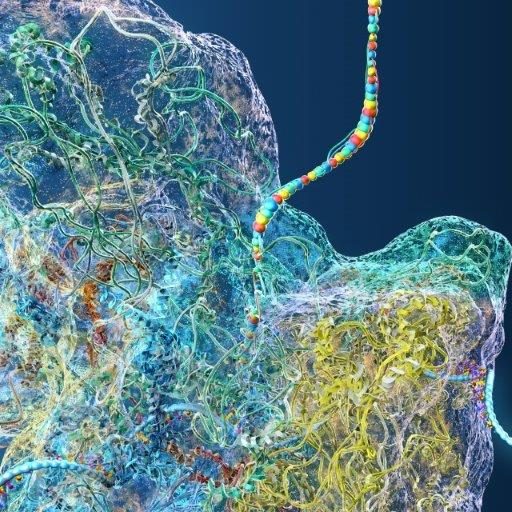
Translation initiation in eukaryotes typically relies on a ternary complex—eIF2 bound to GTP and tRNAᵢMet—to recruit the initiator tRNA to the 40S ribosomal subunit and scan for the start codon. Historically, eIF2A was posited as an alternative initiator factor capable of independent tRNA delivery, though its physiological role remained ambiguous. Roiuk et al. set out to define the functional contribution of human eIF2A in translation initiation and uORF‑mediated control, using HeLa cells. Employing ribosome profiling and luciferase reporter assays in eIF2A knockout (KO) lines, they found no significant effects on cell proliferation, global translation rates, or polysome structure under non‑stress conditions. Ribosome profiling revealed only a handful of mRNAs with altered translational efficiency, among which CCND3 protein levels dropped modestly in one KO line; reporter assays for these candidates showed minimal changes.
They also tested uORF translation using both genome‑wide profiling and tailored reporters containing uORFs with canonical or near‑cognate start codons. No dependence on eIF2A was detected under standard condition. Moreover, under integrated stress response (ISR) induction with tunicamycin, whereby eIF2 function is suppressed, eIF2A KO did not impair translational regulation. Reporter and ribosome profiling data confirmed this: stress‑regulated mRNAs remained properly induced, and uORF translation patterns were unchanged. In sum, Roiuk et al. demonstrate that human eIF2A plays at most a negligible role in translation initiation—and in uORF‑mediated control under both normal and stress conditions—in HeLa cells. They propose it may have function only in specific, untested contexts or in other RNA processes.
Learn more about EIRNABio’s ribosome profiling services here.
Translational landscape provides insight into the molecular mechanism of heterosis in inter‐subspecific hybrid rice
The Plant Journal, 2025
Xi, Z., Wang, M., Wang, F. and Wang, J.

Heterosis—or hybrid vigor—has revolutionized crop breeding by enhancing yield and resilience; yet, the molecular basis, particularly at the level of translation, is not fully understood. Xi et al. addressed this by analyzing translational dynamics in an inter‑subspecific hybrid rice (ZY19, a cross between indica and japonica varieties) along with its two parental lines via genome‑wide RNA-Seq and ribosome profiling. Their combined transcriptomic and translational analysis revealed a pronounced discrepancy between mRNA abundance and translation efficiency, suggesting that translation selectively buffers transcriptional differences. While both additive and non-additive expression patterns emerged at the transcriptional level, the translational landscape was largely dominated by additive expression. Interestingly, many genes exhibiting single-parent expression at the RNA level switched to additive expression when assessed for translation.
Furthermore, the study explored allele-specific expression (ASE), discovering that cis‑ and trans‑regulatory elements acted more independently at the transcriptional stage but tended to function cooperatively at the translational level. The authors also identified several regulatory features that negatively impacted translation efficiency—including alternative splicing (genes with more AS events had lower TE), upstream open reading frames (uORFs), downstream ORFs (dORFs), N6-methyladenosine (m6A) modifications, and microRNAs (miRNAs). Overall, Xi et al. provide a nuanced model of heterosis at the translational level: translation acts as a regulatory buffer to transcriptional variation, allele-specific regulation is reconfigured post-transcriptionally, and multiple RNA features serve as modulators of translation efficiency—shedding fresh light on the molecular underpinnings of hybrid vigor in rice.
Learn more about EIRNABio’s ribosome profiling services here.
Prime editor-based high-throughput screening reveals functional synonymous mutations in human cells
Nature Biotechnology, 2025
Niu, X., Tang, W., Liu, Y., Mo, B., Yu, Y., Liu, Y. and Wei, W.

Synonymous mutations—alterations in DNA that do not change protein sequences are often presumed neutral, yet their functional impact in humans remains underexplored. Niu et al. tackled this gap by implementing a prime editing (PEmax)–based high-throughput screen in human HCT116 cells, using a vast library of ~297,900 engineered pegRNAs to induce synonymous changes across ~3,644 protein-coding genes. The screen revealed that although synonymous mutations generally had weaker effects than nonsynonymous mutations (0.43% versus 3.83% of variants with significant fitness impact), a distinct subset did measurably affect cell proliferation.
To dissect mechanisms underlying these effects, the team developed a machine learning tool, DS Finder, which highlighted that functional synonymous mutations often disrupt mRNA splicing, alter RNA secondary structure (folding), or perturb translation. For instance, the PLK1_S2 variant increased local mRNA stability while repressing translation initiation. The study also integrated Ribo-Seq, single-cell and bulk RNA-Seq data, alongside validation assays to examine effects on mRNA expression, splicing outcomes, and translation efficacy. These combined data enabled the authors to predict clinically deleterious synonymous mutations, including variants annotated as benign in ClinVar but flagged by DS Finder (e.g., G6PC3 c.G399A). In essence, Niu et al. provide powerful evidence that while most synonymous mutations are functionally inert, a meaningful minority can significantly impact human cell fitness through RNA-level regulation—a finding with broad implications for genetics and clinical variant interpretation.
Learn more about EIRNABio’s ribosome profiling services here.