
Translatomics for cancer, neurons and Alzheimer’s

Recent Publications Harnessing the Power of Translatomics
Every week we provide a digest of a small number of recent interesting papers in the field of translatomics.
In this week’s Sunday papers,
- Li et al. revealed that DDX41 acts as an oncogene in liver cancer by promoting ribosome biogenesis and enhancing protein synthesis.
- Zhou et al. find that during neuronal differentiation RNA stability plays an important role in maintaining translational homeostasis.
- Campoy-Campos et al. show that a stressed induced protein, RTP801 regulates tRNA processing implying to its vital role in AD pathogenesis.
CRISPR screening reveals that RNA helicase DDX41 triggers ribosome biogenesis and cancer progression through R-loop-mediated RPL/RPS transcription
Nature Communications. 2025.
Li, H., He, Y., Jiang, J., Liu, Z., Liu, Y., Shi, Q., Ding, J., Li, H., Sun, W., Hu, X., Chen, Z., and He, X.

The study identifies the DEAD-box RNA helicase DDX41 as a critical oncogenic driver in liver cancer using an in vivo CRISPR-Cas9 loss-of-function screen targeting transcriptional regulators. DDX41 is found to be highly expressed in liver tumors and correlates with proliferation and tumorigenicity. DDX41 localizes to R-loop structures within ribosomal protein gene loci and facilitates their processing. Ribosome profiling reveals that it thereby enhances the transcriptions of RPL/RPS —key components of ribosome biogenesis. This upregulation increases ribosome production and overall protein synthesis, supporting rapid cancer cell growth and progression.
The authors also show that the acetyltransferase KAT8 mediates the H3K9ac modification at the DDX41 promoter and facilitates the recruitment of the transcription factors NR2C1 and NR2C2. Importantly, liver cancer cells with high DDX41 are more sensitive to the protein synthesis inhibitor homoharringtonine, which significantly suppresses tumor growth in DDX41-overexpressing models. These findings highlight DDX41’s novel role in linking R-loop processing to ribosome biogenesis and cancer progression, and they suggest that targeting translational machinery could be an effective therapeutic strategy in tumors with elevated DDX41.
Learn more about EIRNABio’s ribosome profiling services here.
Dynamic mRNA Stability Buffer Transcriptional Activation During Neuronal Differentiation and Is Regulated by SAMD4A
Journal of Cellular Physiology, 2024.
Zhou, Y., Rashad, S., Ando, D., Kobayashi, Y., Tominaga, T., Niizuma, K.

Neuronal differentiation is the crucial biological process where neural stem cells transform into specialized, mature neurons, with dendrites and axons through precise gene regulation, driven both by internal transcription factors and external chemical/physical signals. In this study, the authors differentiated the SH-SY5Y neuroblastoma cells using retinoic acid to investigate how mRNA stability contributes to the regulation of gene expression during neuronal differentiation, focusing on how it buffers transcriptional variability to maintain translational consistency. The authors performed RNA-seq, Ribo-seq, and mRNA half-life measurements to uncover that, although thousands of transcripts undergo changes in expression during differentiation, most translation levels remain stable. Thus, Ribo-seq revealed that translation is largely insulated from transcriptional noise during neuronal differentiation, and this insulation according to the authors is achieved through post-transcriptional buffering via mRNA stability. For the same, the authors developed a mathematical framework to classify genes based on their stability and expression and identified stability-buffered genes with key neuronal functions. Integrating this data with a CRISPR interference screen for oxidative stress response genes revealed SEPHS2 as a critical regulator that went undetected at transcription or translation levels alone. Motif analysis pinpointed SAMD4A—an RNA-binding protein—as a major modulator of dynamic mRNA stability during differentiation. Functional experiments showed that knocking down SAMD4A impaired neuronal differentiation and altered stress responses, and that SAMD4A mechanistically regulates stability of multiple mRNAs. Overall, this study reveals that mRNA stability is a critical post-transcriptional mechanism that maintains translational homeostasis during neuronal differentiation, even in the face of widespread transcriptional changes.
Learn more about EIRNABio’s ribosome profiling services here.
RTP801 interacts with the tRNA ligase complex and dysregulates its RNA ligase activity in Alzheimer's disease
Nucleic Acid Research, 2024,
Campoy-Campos, G., Solana-Balaguer, J., Guisado-Corcoll, A., Chicote-González, A., Garcia-Segura, P., Pérez-Sisqués, L., Torres, A.G., Canal, M., Molina-Porcel, L., Fernández-Irigoyen, J., Santamaria, E., Ribas de Pouplana. L., Alberch, J., Martí, E., Giralt, A., Pérez-Navarro, E., and Malagelada, C.
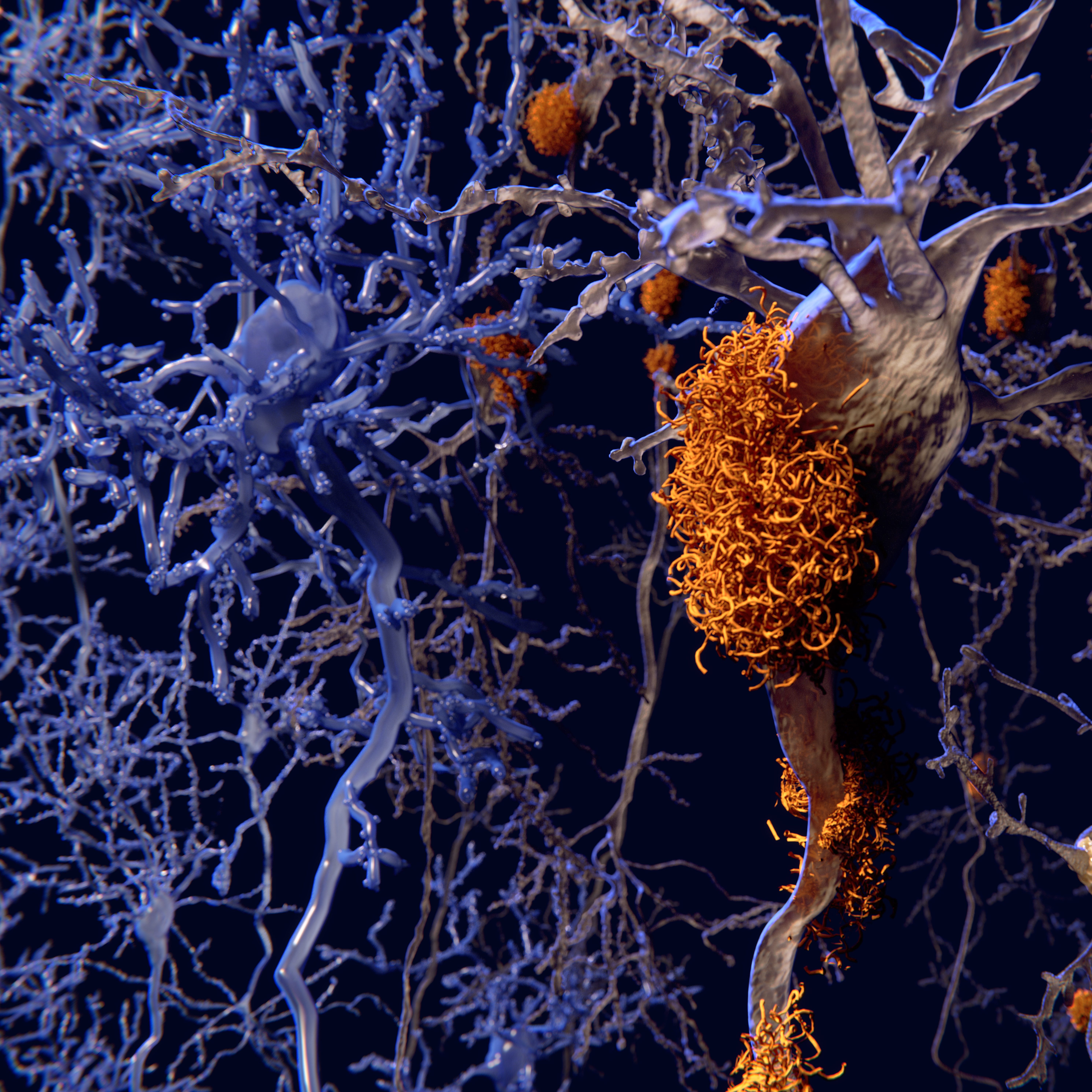
This study addresses how RTP801 (REDD1), a stress‑induced protein elevated in Alzheimer’s disease (AD) contributes to RNA processing dysfunction and neurodegeneration. The authors discover that RTP801 physically interacts with key members of the tRNA ligase complex (tRNA‑LC)—namely HSPC117, DDX1, and CGI‑99. The tRNA‑LC performs two ligation roles: it ligates exons of intron‑containing tRNAs and also ligates exons of XBP1 mRNA during the unfolded protein response (UPR). While RTP801 does not significantly change the protein levels of these ligase complex members, it modulates their activity. Elevated RTP801 impairs RNA ligase activity, reducing XBP1 splicing, increasing unprocessed pre‑tRNAs shown using both in vitro and in vivo assays. In postmortem human AD hippocampus, where RTP801 is elevated, there is dramatically reduced XBP1 splicing. In the 5xFAD AD mouse model, silencing RTP801 in hippocampal neurons restores Xbp1 splicing and prevents accumulation of intron‐containing pre‑tRNAs, suggesting recovery of tRNA processing. Moreover, the tRNA‑enriched RNA fraction from 5xFAD mice (which accumulates due to RTP801 action) induces abnormal dendritic arborization in cultured hippocampal neurons; this effect is mitigated when RTP801 is silenced in the source neurons. This suggests that accumulation of unprocessed or misprocessed tRNA (or pre‑tRNA) moieties can contribute to neuronal dysfunction. These findings link stress signaling to RNA processing failure in neurodegeneration and identify RTP801 as a therapeutic target. Restoring ligase activity by silencing RTP801 in AD mouse models rescues molecular and cellular deficits, offering a potential strategy to combat RNA dysregulation and neuronal degeneration in Alzheimer’s disease.