

Introduction: Folding While Translating—A Biological Balancing Act
Protein folding doesn’t wait for translation to finish. As nascent polypeptides emerge from the ribosome tunnel, they begin folding into functional domains. This cotranslational folding is essential for protein quality and function, and it often relies on strategic pauses in elongation to ensure proper timing and spacing.
Disome profiling is the most effective method for investigating these pauses. By capturing where ribosomes stack due to regulated translation delays, this technique illuminates how folding, elongation, and translational control are interwoven in real time.
How Disome Profiling Captures Folding-Linked Ribosome Pausing
Disome profiling isolates mRNA fragments protected by two ribosomes—evidence of a trailing ribosome colliding with a paused leader. These events often mark biologically programmed pauses supporting:
- Folding of structured protein domains.
- Recruitment of molecular chaperones.
- Coordination with membrane targeting or post-translational modifications.
The workflow includes:
- Precise RNase digestion to enrich disome-protected fragments.
- Gradient ultracentrifugation to isolate ribosome pairs.
- Sequencing and mapping of ribosome stacking on transcripts.
- Codon-level bioinformatic analysis to link pausing with known domain boundaries.
Applications of Disome Profiling in Cotranslational Folding
1. Mapping Folding-Linked Pause Sites
Disome profiling reveals where ribosome pausing supports domain-wise folding, including:
- Structured domains (e.g., β-sheets, α-helices) that require pausing for proper formation.
- Protein segments that recruit folding chaperones co-translationally.
- Signal peptides that guide proteins to membranes or organelles.
2. Understanding Folding Failures in Disease
Disrupted folding can lead to misfolded proteins, aggregation, and disease. Disome profiling identifies:
- Aberrant translation dynamics in disease models.
- Loss of regulated pausing linked to folding inefficiency.
- Candidate pause sites for therapeutic intervention.
3. Improving Therapeutic Protein Expression
Disome profiling can be applied to recombinant expression systems to:
- Optimise codon usage for balanced translation speed.
- Minimise aggregation by supporting natural folding intervals.
- Refine therapeutic constructs for increased yield and stability.
Why Traditional Techniques Fall Short
Standard ribosome profiling lacks the resolution to detect persistent stacking events that facilitate folding. Even advanced proteomics cannot reveal how translation timing affects folding. Only disome profiling can:
- Identify where pausing actively supports folding.
- Distinguish between regulatory pauses and collision-induced stalling.
- Integrate ribosome kinetics with folding domain architecture.
Overcoming Challenges in Studying Cotranslational Folding
Subtle, Structured Pause Signals
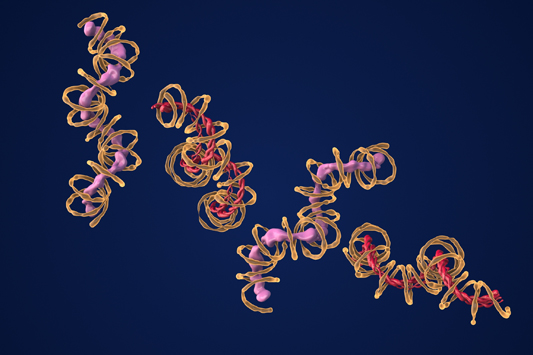
Folding-related pauses are often short but consistent. EIRNA Bio uses ultra-deep sequencing to detect even low-abundance disome footprints in specific codon contexts.

Contextual Folding Events
Protein domains fold differently depending on stress, chaperone presence, or translation rate. EIRNA Bio helps you:
- Compare folding-linked pause profiles across conditions.
- Isolate folding-linked changes from general translational noise.
- Customise analysis to your specific protein or disease model.
Integrating Structural and Translational Data
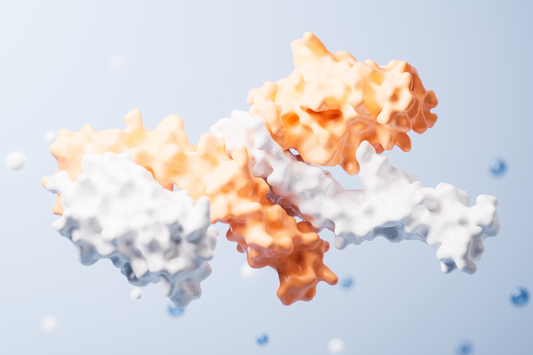
Folding is a structural event; translation is kinetic. Our bioinformatics platform supports:
- Overlaying disome data with known domain structures.
- Exporting pause maps for predictive protein design.
EIRNA Bio’s Expertise in Cotranslational Folding Research
EIRNA Bio combines advanced disome profiling with folding-aware analytics to support:
- Chaperone-related translational regulation studies.
- Folding-deficient protein variant analysis.
- Bioproduction optimisation for industrial proteins and biologics.
Our team helps interpret pausing profiles in the context of structure and function, providing actionable insights for translational science and therapeutic design.
Use Cases for Cotranslational Folding Analysis
1. Folding-Linked Disease Mechanisms
Cotranslational folding is often disrupted in:
- Neurodegenerative diseases (e.g., ALS, Parkinson’s, Alzheimer’s).
- Cancers with altered proteostasis.
- Rare protein-folding disorders.
Disome profiling uncovers the translational checkpoints associated with these folding failures.
2. Protein Engineering and Synthetic Biology
Designing new proteins requires understanding how they're built during translation. Disome profiling informs:
- Codon choices for pause insertion.
- Strategies to balance speed with structural precision.
- Folding-friendly design of synthetic genes or fusion proteins.
3. Therapeutic Protein Development
For biologics production, folding efficiency impacts yield and efficacy. Disome profiling helps:
- Tune translational pacing for proper folding.
- Avoid bottlenecks and aggregation.
- Improve expression construct design.
Interactive Visualisation with EIRNA Bio-Connect
With EIRNA Bio-Connect, you can explore pausing and folding relationships directly:
- Pause-Folding Overlay: Map disome pause intensity onto domain architecture.
- Cross-Condition Comparisons: See how folding-linked translation shifts under stress or treatment.
- Folding Profiles for Therapeutic Constructs: Evaluate construct design for balanced translation and folding.
Why Choose EIRNA Bio for Folding-Linked Disome Profiling?
EIRNA Bio provides unmatched resolution and interpretation for studying cotranslational protein folding. From understanding disease-linked folding errors to optimising biotherapeutic design, our disome profiling services deliver the clarity you need to connect structure and synthesis.
Support protein folding from the ribosome out—partner with EIRNA Bio. Contact Us Today

Are you ready to book an appointment now!